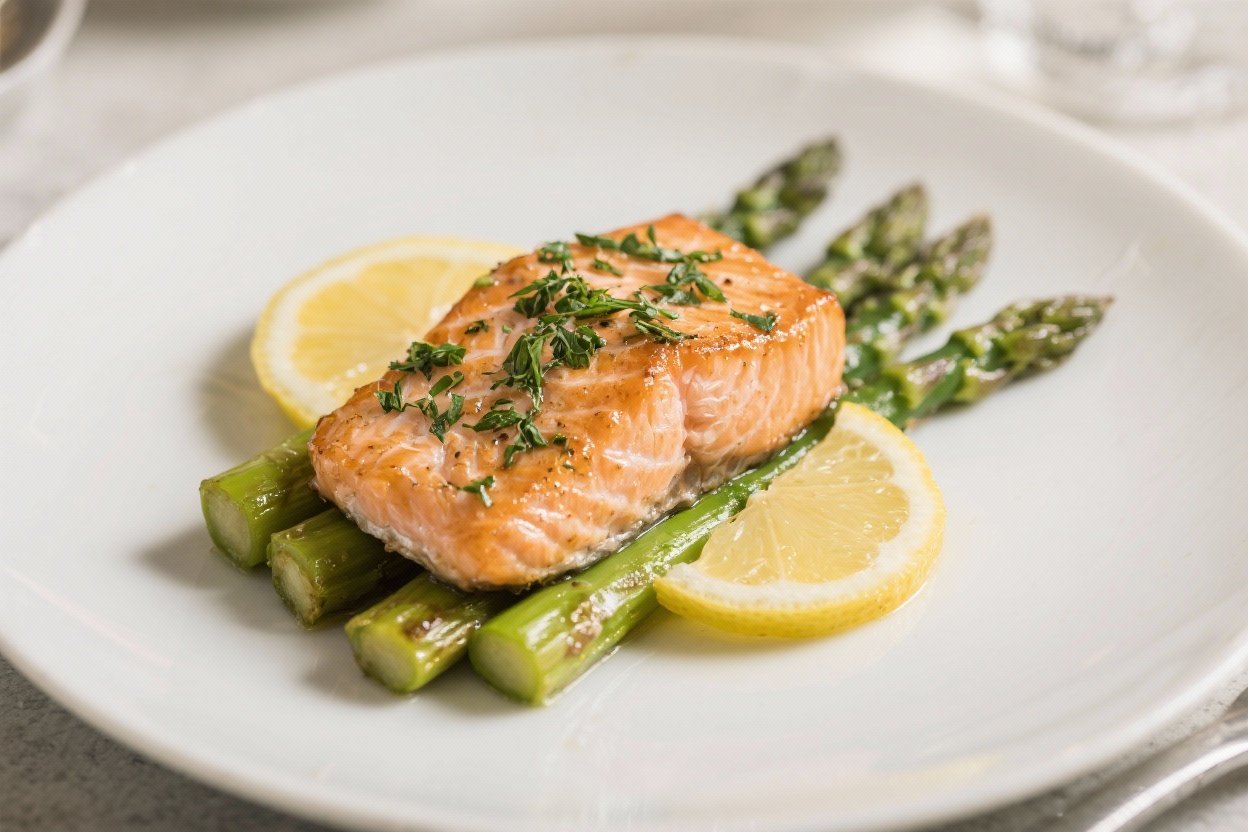
Lemon Herb Salmon With Asparagus – Bright, Fresh, and Weeknight Easy
This is the kind of meal that feels restaurant-worthy but comes together on a busy weeknight. Juicy salmon, roasted asparagus, and a lively lemon herb finish make every bite feel fresh and satisfying. The flavors are clean and simple, and the steps are easy to follow.
Need More Easy Dinner Ideas?
Get my FREE 7-Day Easy Dinner Reset and enjoy a full week of healthy dinners without the meal-planning stress.
You’ll get tender fish, crisp-tender veggies, and a sauce that ties it all together. Whether you’re cooking for two or feeding a small crowd, this one never misses.
What Makes This Special
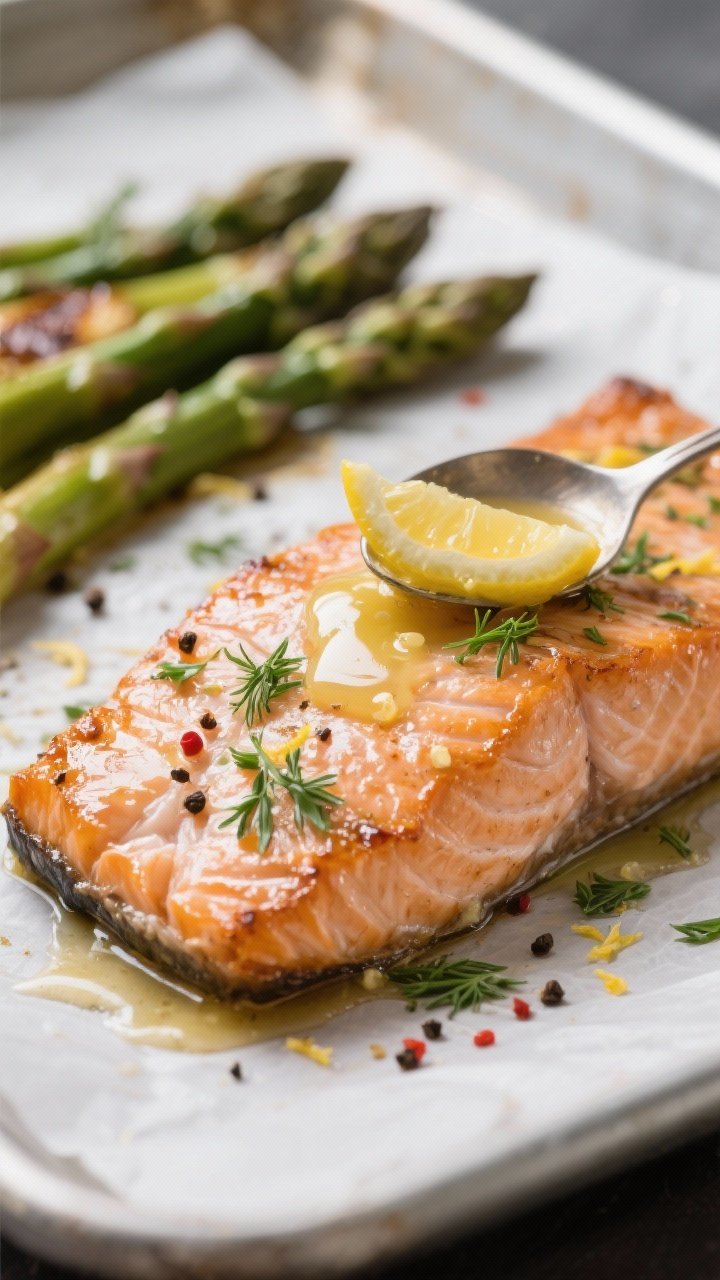
This recipe keeps things simple without skimping on flavor. The lemon zest and fresh herbs wake up the salmon, while the asparagus roasts alongside for a complete, one-pan meal.
A quick buttery pan sauce (or olive oil if you prefer) adds a glossy finish. It’s a great balance of bright, savory, and slightly tangy. Plus, cleanup is minimal, which is always a win.
Shopping List
- Salmon fillets (4 pieces, 5–6 oz each, skin-on preferred)
- Asparagus (1 large bunch, woody ends trimmed)
- Lemon (1 large, for zest and juice)
- Fresh herbs (2–3 tablespoons total, finely chopped: parsley, dill, or chives)
- Garlic (2 cloves, minced)
- Olive oil (2–3 tablespoons)
- Unsalted butter (1–2 tablespoons; optional but recommended)
- Honey or maple syrup (1 teaspoon, optional for balance)
- Crushed red pepper flakes (pinch, optional)
- Kosher salt and black pepper
- Lemon wedges (for serving)
Instructions
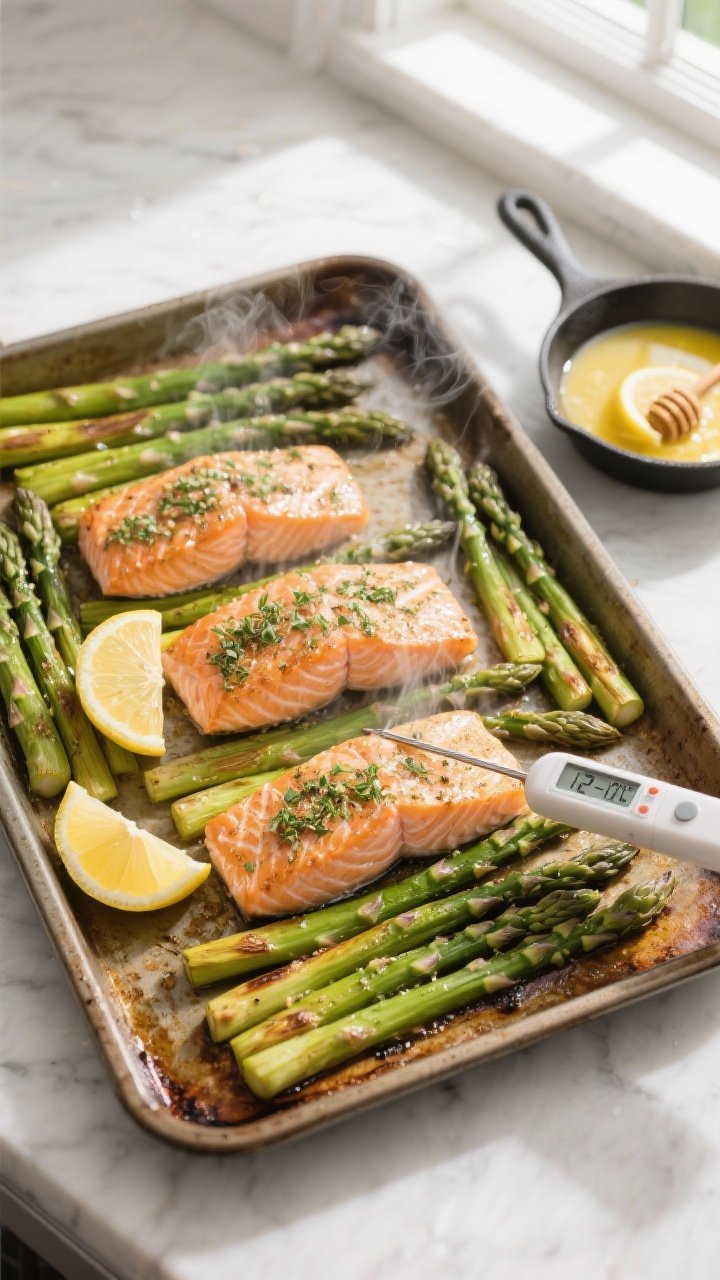
- Preheat and prep. Heat the oven to 425°F (220°C).
Line a sheet pan with parchment for easy cleanup. Pat the salmon dry with paper towels to help it sear and roast better.
- Season the asparagus. Spread the asparagus on the pan. Drizzle with 1 tablespoon olive oil, season with salt and pepper, and toss to coat.
Push to the sides, leaving space in the center for the salmon.
- Make the lemon herb mix. In a small bowl, combine lemon zest, half the lemon juice, chopped herbs, minced garlic, 1 tablespoon olive oil, a pinch of red pepper flakes (if using), and a small pinch of salt.
- Season the salmon. Place fillets skin-side down on the pan. Rub the tops with half of the lemon herb mix. Sprinkle with salt and pepper.
If your fillets are very thick, score the surface lightly to help the seasoning sink in.
- Roast. Bake for 10–12 minutes, depending on thickness. The salmon should flake easily and reach an internal temperature of 125–130°F for medium. The asparagus should be crisp-tender with light browning.
- Make a quick pan sauce (optional but great). While the salmon roasts, melt butter in a small skillet over low heat.
Add the remaining lemon herb mix and the rest of the lemon juice. Stir in a teaspoon of honey if you like a touch of balance. Warm just until fragrant, 30–60 seconds.
- Finish and serve. Spoon the warm sauce over the salmon and asparagus.
Serve with extra lemon wedges. Garnish with more herbs for a fresh pop.
Keeping It Fresh
For best results, cook salmon the day you buy it or the next day. If you need to store leftovers, place them in an airtight container and refrigerate for up to 2 days.
Reheat gently in a low oven (300°F) or in a skillet over low heat with a splash of water or broth to keep it moist.
You can also serve leftovers cold over a salad. Flake the salmon, slice the asparagus, and toss with greens, extra herbs, and a squeeze of lemon. It’s a fresh lunch that doesn’t taste like leftovers.
Health Benefits
- Rich in omega-3s: Salmon provides heart-healthy fats that support brain and joint health.
- High-quality protein: Each serving delivers satisfying protein without feeling heavy.
- Vitamins and minerals: Asparagus adds fiber, folate, vitamin K, and antioxidants.
- Lower in saturated fat: Using olive oil and a small amount of butter keeps it balanced.
- Balanced plate: Protein, veggies, and healthy fats make this feel-good food.
Common Mistakes to Avoid
- Overcooking the salmon: Pull it at 125–130°F for medium.
It will continue to cook slightly off the heat.
- Skipping the pat-dry step: Wet fish won’t brown well and can taste bland.
- Using too much lemon juice before roasting: Acid can start “cooking” the surface. Add most of it after roasting in the warm sauce.
- Overcrowding the pan: Give the fish space so it roasts, not steams.
- Neglecting seasoning: Salt matters. Season both the asparagus and the fish for full flavor.
Variations You Can Try
- Sheet-pan potatoes: Add small halved baby potatoes.
Roast them 10–15 minutes first, then add asparagus and salmon.
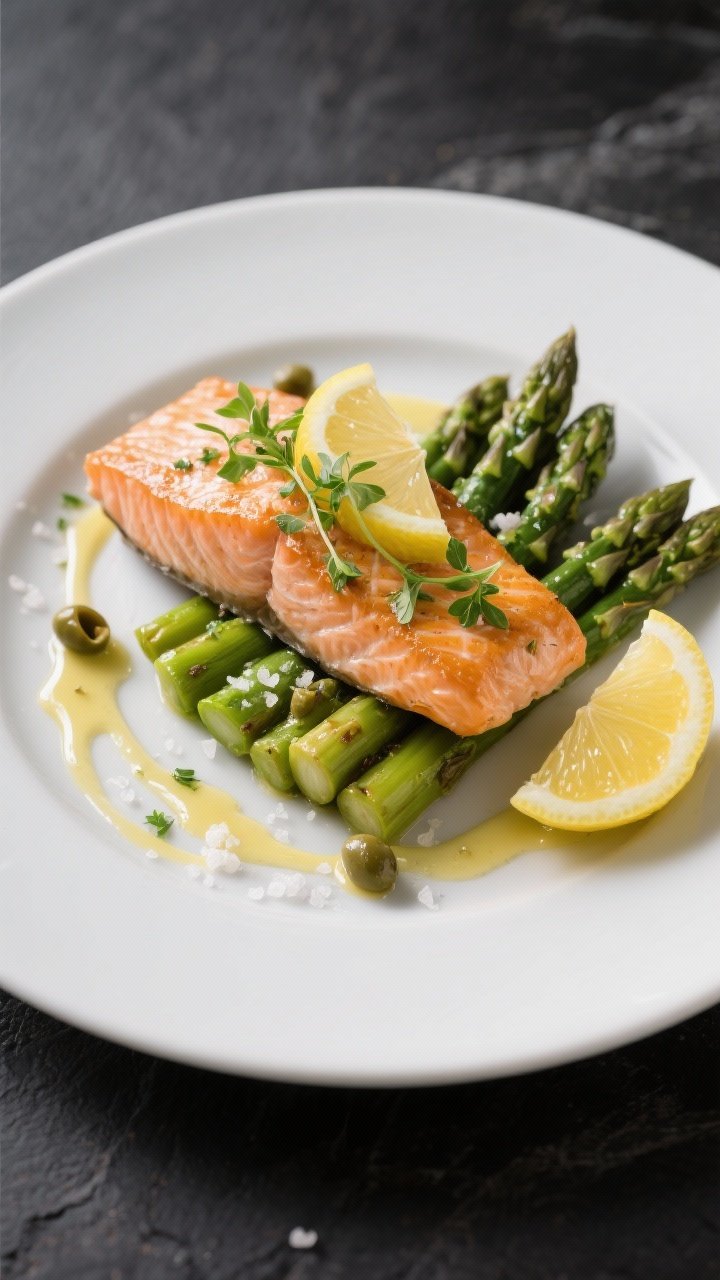
- Mediterranean twist: Add capers, sliced olives, and cherry tomatoes. Finish with a drizzle of extra-virgin olive oil.
- Herb swap: Try tarragon, basil, or cilantro. Mix and match based on what you have.
- Grilled version: Grill the salmon skin-side down over medium heat for 6–8 minutes, then flip for 1–2 minutes.
Grill asparagus alongside.
- Dairy-free: Skip the butter and use olive oil only. The lemon and herbs keep it bright.
- Spice it up: Add a teaspoon of Dijon and a touch of smoked paprika to the herb mix.
FAQ
Can I use frozen salmon?
Never Wonder What's For Dinner Again
Save time, eat healthier, and take the stress out of dinner. Get a full week of easy healthy dinners delivered straight to your inbox.
Yes. Thaw it overnight in the fridge or under cold running water, then pat dry very well.
Frozen salmon can shed more moisture, so drying is key for good browning.
Skin-on or skinless—what’s better?
Skin-on is best for roasting. It protects the fish from the heat and helps keep it moist. You can slide a spatula between the flesh and skin after cooking if you prefer not to eat it.
How do I know when the asparagus is done?
It should be bright green with lightly browned tips and a bit of snap when you bite it.
If the stalks are very thick, you may need an extra 2–3 minutes.
What if I don’t have fresh herbs?
Dried herbs work in a pinch. Use 1 teaspoon dried dill or parsley total, and add it to the warm butter or oil so it blooms. Fresh lemon zest will help keep the flavor lively.
Can I make this ahead?
You can prep the herb mixture and trim the asparagus in advance.
Roast the fish just before serving. Cooked salmon loses its best texture if reheated too long.
What should I serve with it?
It pairs well with quinoa, couscous, roasted potatoes, or a simple green salad. A dollop of yogurt mixed with lemon and dill also makes a nice, cool contrast.
Is the honey necessary?
No.
It simply rounds out the lemon’s acidity. If you prefer a purely savory finish, leave it out.
Wrapping Up
Lemon Herb Salmon with Asparagus is fresh, bright, and easy enough for any weeknight. With a short ingredient list and a quick roasting time, it’s a reliable go-to you’ll make again and again.
Keep the flavors clean, don’t overcook the fish, and finish with a warm lemon herb drizzle. Simple steps, great results, and hardly any dishes—what’s not to love?
Loved This Recipe?
If you're looking for more simple, healthy dinners your family will actually eat, grab my FREE 7-Day Easy Dinner Reset. You'll get 7 easy dinner recipes, simple grocery lists, and a done-for-you plan that takes the stress out of mealtime.