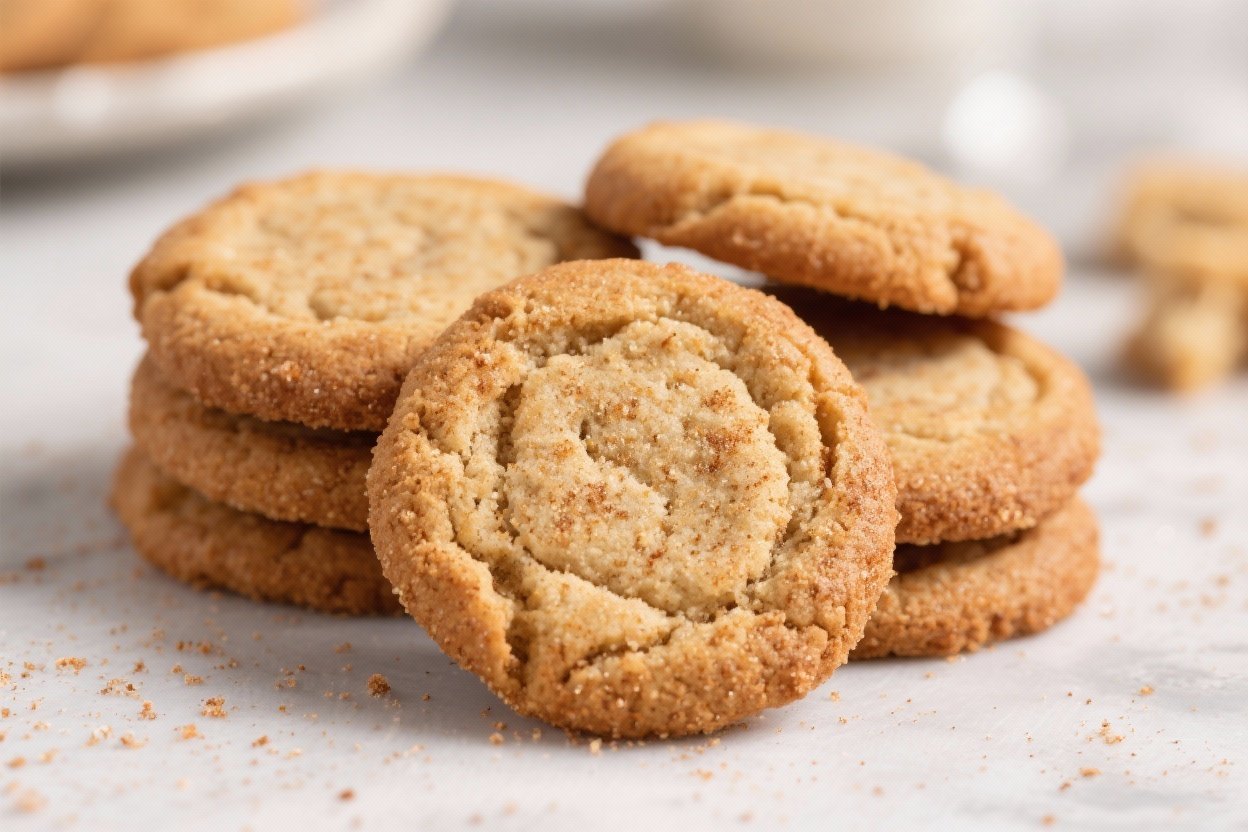
Keto Snickerdoodle Cookies – Soft, Cinnamon-Sugar Flavor Without the Carbs
These keto snickerdoodle cookies taste like the classic you grew up with, but without the sugar crash. They’re soft in the middle, lightly crisp on the edges, and rolled in a cinnamon “sugar” coating that gives each bite that familiar warmth. The dough comes together fast with simple pantry staples, and it bakes in under 10 minutes.
Need More Easy Dinner Ideas?
Get my FREE 7-Day Easy Dinner Reset and enjoy a full week of healthy dinners without the meal-planning stress.
If you’re craving a cozy cookie that fits your low-carb goals, this one hits the spot. Keep a batch on hand for coffee breaks, school pickups, or late-night treats.
Why This Recipe Works

Traditional snickerdoodles rely on sugar and flour for texture and taste. This version uses almond flour and granulated erythritol or allulose to deliver a similar crumb and sweetness without the carbs.
Cream of tartar and baking soda bring that classic slight tang and soft chew, even without gluten. A touch of butter and vanilla rounds out flavor, while the cinnamon “sugar” coating gives the signature finish. The result is a cookie that’s tender, aromatic, and genuinely satisfying.
Shopping List
- Almond flour (super-fine blanched for best texture)
- Butter (unsalted, softened)
- Granulated sweetener (erythritol, allulose, or a blend; use a 1:1 sugar replacement)
- Egg (large)
- Vanilla extract
- Cream of tartar
- Baking soda
- Ground cinnamon
- Salt
- Optional: Xanthan gum (for extra chew), coconut flour (tiny amount for structure), powdered sweetener for a finer coating
Instructions
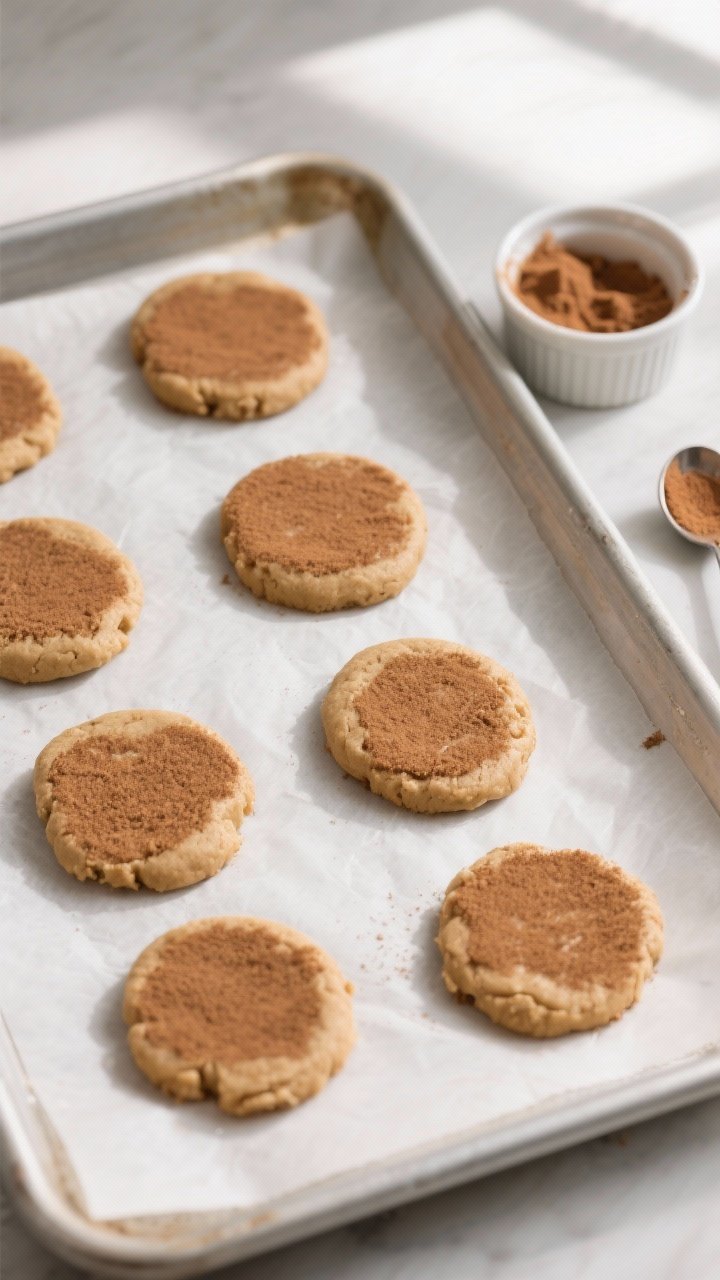
- Preheat and prep: Heat your oven to 350°F (175°C).
Line a baking sheet with parchment paper for easy cleanup.
- Mix the dry ingredients: In a bowl, whisk 2 cups almond flour, 1 teaspoon cream of tartar, 1/2 teaspoon baking soda, and 1/4 teaspoon salt. If using xanthan gum, add 1/4 teaspoon now.
- Cream the butter and sweetener: In a separate bowl, beat 1/2 cup softened butter with 2/3 cup granulated keto sweetener until light and fluffy, about 2 minutes. Add 1 large egg and 1 teaspoon vanilla extract.
Beat until smooth.
- Combine: Add dry ingredients to the wet mixture and mix until a soft dough forms. If the dough feels sticky, chill for 15 minutes to firm it up.
- Make the cinnamon “sugar”: In a small bowl, combine 3 tablespoons granulated (or powdered) keto sweetener with 1 tablespoon ground cinnamon. Adjust cinnamon to taste.
- Shape and coat: Scoop 1 tablespoon portions of dough and roll into balls.
Toss each ball in the cinnamon mixture until coated. Place on the prepared baking sheet with space between.
- Flatten slightly: Gently press each ball to about 1/2 inch thick. This helps them bake evenly and get the right shape.
- Bake: Bake for 8–10 minutes, until the edges are set and lightly golden.
The centers will look soft—that’s perfect.
- Cool: Let cookies cool on the sheet for 10 minutes, then move to a rack. They firm up as they cool.
- Optional extra coating: While warm, lightly sprinkle more cinnamon sweetener on top for a bakery-style finish.
How to Store
Keep cookies in an airtight container at room temperature for 3–4 days. For longer storage, refrigerate for up to 1 week.
They also freeze well: arrange in a single layer, freeze until firm, then store in a freezer bag for up to 2 months. Thaw at room temperature or warm briefly in a low oven to refresh the texture.

Why This is Good for You
- Low in net carbs: Almond flour and keto sweeteners keep the carb count down, making these cookies friendly for keto and low-carb lifestyles.
- Healthy fats: Almond flour and butter provide fats that help with satiety. You’ll feel satisfied with fewer cookies.
- No refined sugar: Using erythritol or allulose avoids blood sugar spikes and crashes.
- Almond flour nutrients: Almonds bring vitamin E, magnesium, and fiber, which support overall health and digestion.
What Not to Do
- Don’t overbake: They should look a bit soft in the center when you pull them out.
Overbaking makes them dry and crumbly.
- Don’t skip the chill if sticky: Warm dough can spread too much. A quick chill leads to thicker, chewier cookies.
- Don’t use coconut flour 1:1: Coconut flour is highly absorbent and will make the cookies dry. If you add it, use just 1–2 teaspoons for structure.
- Don’t use liquid sweeteners: Syrups and drops change the moisture balance and can make the dough too loose.
- Don’t forget the cream of tartar: It adds that snickerdoodle tang and helps with the classic chew.
Alternatives
- Sweetener: Allulose makes a softer cookie and browns more; erythritol keeps things crisper.
A 50/50 blend offers balance. For the coating, a powdered sweetener clings best.
- Dairy-free: Swap butter for softened coconut oil or a plant-based butter stick. Note: coconut oil yields a slightly firmer cookie when cooled.
- Egg-free: Try a flax egg (1 tablespoon ground flax + 3 tablespoons water, rested 10 minutes).
The cookies will be a touch denser but still tasty.
- Spice twist: Add a pinch of nutmeg or cardamom to the coating for a warm, bakery-style flavor.
- Cinnamon strength: If you like a bold coating, increase cinnamon to 1.5 tablespoons and adjust sweetener to taste.
- Protein boost: Replace 2 tablespoons of almond flour with unflavored whey isolate for a slightly chewier bite. Avoid plant protein here, which can get gritty.
FAQ
How many net carbs are in each cookie?
It depends on your exact ingredients and size. For a batch making 20 cookies, each typically lands around 1.5–2.5 net carbs.
Check your labels and calculate based on your sweetener and almond flour.
Never Wonder What's For Dinner Again
Save time, eat healthier, and take the stress out of dinner. Get a full week of easy healthy dinners delivered straight to your inbox.
Can I use baking powder instead of cream of tartar and baking soda?
You can, but the flavor will be less “snickerdoodle” and more sugar cookie. Use about 1 teaspoon baking powder and skip the cream of tartar and baking soda. The texture will still be good, just a bit different.
Why did my cookies spread too much?
The dough was likely too warm or too wet.
Chill the dough 15–20 minutes, and measure almond flour properly. Also, avoid lining the tray with silicone mats, which can encourage spreading; parchment works best.
Which sweetener tastes most like sugar?
Allulose tastes very close to sugar and has no cooling effect, but it makes a softer cookie. Erythritol is sweeter by volume and can have a slight cooling sensation; it bakes crisper.
A blend often gives the best balance.
Can I make the dough ahead?
Yes. Chill the dough for up to 48 hours, tightly covered. Roll in the cinnamon mixture just before baking.
You can also freeze pre-rolled dough balls and bake from frozen, adding 1–2 minutes.
Do these taste like real snickerdoodles?
They’re very close. The cinnamon coating, vanilla, and tang from cream of tartar create that classic flavor, while almond flour adds a slightly nutty note. Most tasters won’t notice they’re keto.
How do I keep them soft?
Pull them from the oven while the centers still look a little underdone.
Cool on the sheet for 10 minutes. Store with a small piece of bread or a slice of apple in the container if needed (remove after a few hours to avoid moisture buildup).
Can I make them larger?
Yes, use 2 tablespoons of dough per cookie and bake 1–2 minutes longer. Keep an eye on the edges so they don’t overbrown.
Wrapping Up
These keto snickerdoodle cookies have everything you want: warm cinnamon, a gentle tang, and a soft, cozy bite—without the sugar overload.
They’re quick to make, freezer-friendly, and easy to customize to your taste. Whether you’re new to keto or a seasoned pro, this is a dependable, crowd-pleasing cookie to keep in your rotation. Brew some coffee, bake a batch, and enjoy a classic made low-carb the right way.
Printable Recipe Card
Want just the essential recipe details without scrolling through the article? Get our printable recipe card with just the ingredients and instructions.
Loved This Recipe?
If you're looking for more simple, healthy dinners your family will actually eat, grab my FREE 7-Day Easy Dinner Reset. You'll get 7 easy dinner recipes, simple grocery lists, and a done-for-you plan that takes the stress out of mealtime.