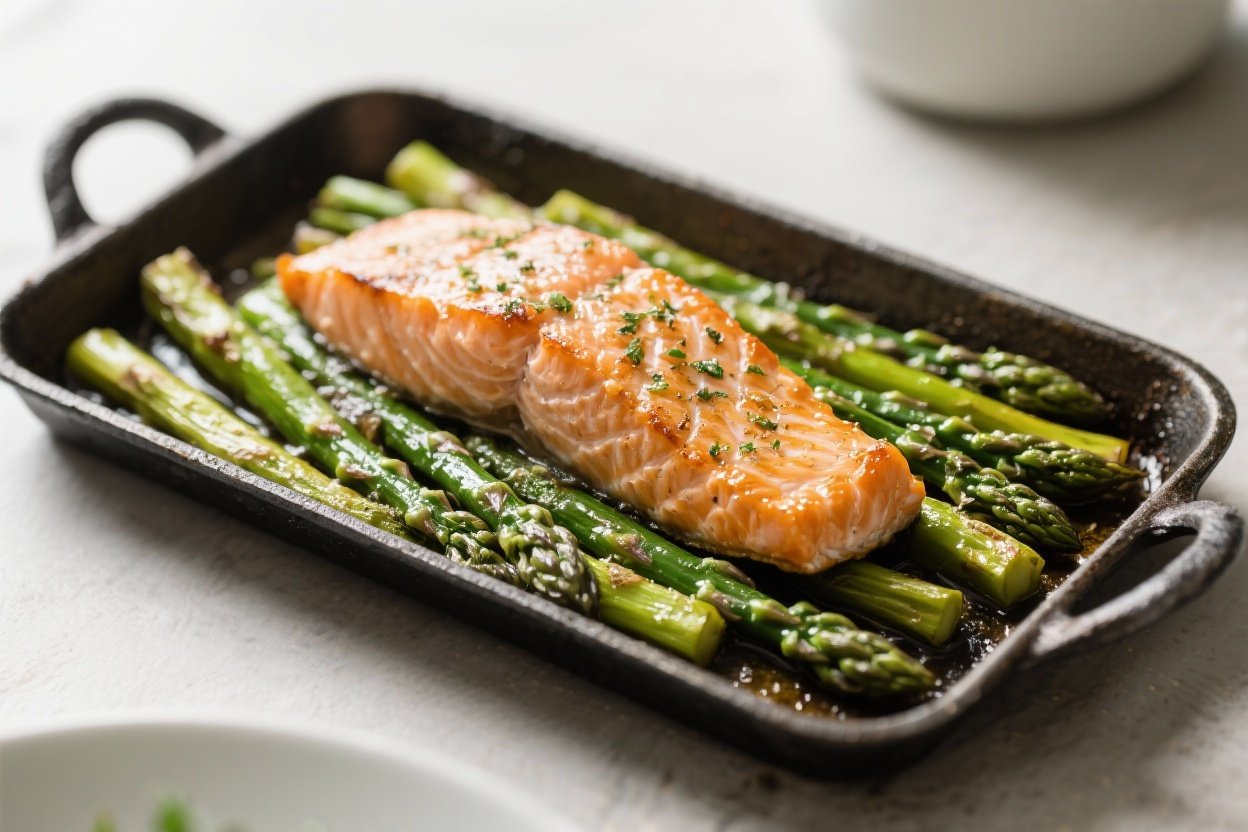
One-Pan Baked Salmon with Asparagus – Easy, Fresh, and Weeknight-Friendly
If you’re craving a quick dinner that feels a little special, this one-pan baked salmon with asparagus delivers every time. It’s bright, fresh, and takes minimal effort, but still tastes like something you’d order at a restaurant. Everything cooks together on a single sheet pan, so cleanup is painless.
The lemon, garlic, and herb butter melts into the salmon while the asparagus turns tender-crisp. You get a complete, balanced meal with very little fuss.
Ingredients
Method
- Preheat the oven: Set to 400°F (200°C). Line a large sheet pan with parchment for easier cleanup, or lightly oil it.
- Prep the asparagus: Snap off the woody ends. Spread the spears on the pan. Drizzle with 1–2 tablespoons olive oil, season with salt, pepper, and a pinch of red pepper flakes if you like. Toss to coat and arrange in a single layer along the sides of the pan.
- Season the salmon: Pat the fillets dry. Place them in the center of the pan, leaving a little space between each. Drizzle with olive oil and season both sides with salt, pepper, and paprika. Place fillets skin-side down if using skin-on salmon.
- Make a quick lemon-herb butter: In a small bowl, mix softened butter with lemon zest, half the lemon juice, minced garlic, and chopped herbs. Spoon a small dollop on each salmon fillet. If skipping butter, simply drizzle extra olive oil and sprinkle the herbs and garlic on top.
- Add brightness: Squeeze the remaining lemon juice over the asparagus and around the pan. Add a few thin lemon slices on top of the salmon for extra fragrance.
- Bake: Roast for 10–12 minutes, depending on fillet thickness. Thicker pieces may need 14–15 minutes. The salmon should flake easily and be just opaque in the center. Asparagus should be tender with lightly crisp tips.
- Optional finishing touches: Sprinkle the asparagus with a little Parmesan right as it comes out of the oven. Add more fresh herbs over the salmon. Taste and add a final pinch of salt or a squeeze of lemon if needed.
- Serve: Plate each fillet with a generous portion of asparagus. Spoon any pan juices over the top for extra flavor.

What Makes This Special
This recipe is all about simplicity without sacrificing flavor. The salmon stays juicy thanks to a quick seasoning, a drizzle of olive oil, and a pat of herb butter that bastes the fish as it bakes.
The asparagus roasts alongside the salmon, soaking up lemony pan juices and getting a light char on the tips. With a handful of pantry staples, you can create a dish that tastes bright and satisfying.
It’s also flexible. You can swap in different herbs, add potatoes if you want something heartier, or use a Dijon glaze instead of butter.
The recipe is forgiving and beginner-friendly, but still impressive enough for guests.
What You’ll Need
- Salmon fillets: 4 fillets, about 5–6 ounces each, skin-on or skinless
- Asparagus: 1 large bunch, woody ends trimmed
- Olive oil: 2–3 tablespoons
- Unsalted butter: 2 tablespoons, softened (optional but recommended)
- Lemon: 1 large, zested and juiced; plus extra slices for garnish
- Garlic: 2–3 cloves, finely minced
- Fresh herbs: 2 tablespoons chopped parsley or dill (or a mix)
- Salt and pepper: To taste
- Red pepper flakes: Pinch, for gentle heat (optional)
- Paprika or smoked paprika: 1/2 teaspoon (optional, for color and depth)
- Parmesan: 2 tablespoons, finely grated, for the asparagus (optional)
- Sheet pan: Lined with parchment paper or lightly oiled
Step-by-Step Instructions
- Preheat the oven: Set to 400°F (200°C). Line a large sheet pan with parchment for easier cleanup, or lightly oil it.
- Prep the asparagus: Snap off the woody ends. Spread the spears on the pan.
Drizzle with 1–2 tablespoons olive oil, season with salt, pepper, and a pinch of red pepper flakes if you like. Toss to coat and arrange in a single layer along the sides of the pan.
- Season the salmon: Pat the fillets dry. Place them in the center of the pan, leaving a little space between each.
Drizzle with olive oil and season both sides with salt, pepper, and paprika. Place fillets skin-side down if using skin-on salmon.
- Make a quick lemon-herb butter: In a small bowl, mix softened butter with lemon zest, half the lemon juice, minced garlic, and chopped herbs. Spoon a small dollop on each salmon fillet.
If skipping butter, simply drizzle extra olive oil and sprinkle the herbs and garlic on top.
- Add brightness: Squeeze the remaining lemon juice over the asparagus and around the pan. Add a few thin lemon slices on top of the salmon for extra fragrance.
- Bake: Roast for 10–12 minutes, depending on fillet thickness. Thicker pieces may need 14–15 minutes.
The salmon should flake easily and be just opaque in the center. Asparagus should be tender with lightly crisp tips.
- Optional finishing touches: Sprinkle the asparagus with a little Parmesan right as it comes out of the oven. Add more fresh herbs over the salmon.
Taste and add a final pinch of salt or a squeeze of lemon if needed.
- Serve: Plate each fillet with a generous portion of asparagus. Spoon any pan juices over the top for extra flavor.
How to Store
Cool leftovers to room temperature, then store in an airtight container in the fridge for up to 3 days. Keep the salmon and asparagus together or separate—either works.
For reheating, warm gently in a 300°F (150°C) oven for 8–10 minutes, or microwave on 50% power in short bursts to avoid overcooking.
To freeze, store cooked salmon (without asparagus) tightly wrapped for up to 2 months. Thaw overnight in the fridge before reheating. Asparagus doesn’t freeze as well, so it’s best enjoyed fresh.
Health Benefits
- High in omega-3s: Salmon is rich in heart-healthy fats that support brain function and reduce inflammation.
- Lean protein: Each serving provides satisfying protein to keep you full without weighing you down.
- Vitamins and minerals: Asparagus offers folate, vitamins A, C, E, and K, plus fiber for digestion.
- Balanced meal: Protein, healthy fats, and fiber come together for a nourishing plate with steady energy.
- Low effort, whole-food ingredients: Simple seasonings and fresh produce keep sodium and additives in check.
What Not to Do
- Don’t overcook the salmon: Dry, chalky salmon is the main risk.
Pull it when it flakes but remains moist and slightly translucent in the center.
- Don’t crowd the pan: If everything is piled on top of itself, it will steam instead of roast. Use a large sheet pan or two smaller ones.
- Don’t skip drying the fillets: Patting salmon dry helps seasonings stick and promotes better texture.
- Don’t forget acid: Lemon brightens the whole dish. Without it, the flavors can feel flat.
- Don’t use tough, woody asparagus: Trim well.
Thick, old asparagus can stay stringy; if spears are very thick, peel the lower third.
Recipe Variations
- Dijon-maple glaze: Mix 1 tablespoon Dijon, 1 tablespoon pure maple syrup, 1 teaspoon olive oil, and a pinch of salt. Brush on the salmon before baking.
- Garlic-parmesan asparagus: Toss spears with 1 tablespoon olive oil, 1 minced garlic clove, and 2 tablespoons Parmesan. Roast as directed.
- Mediterranean style: Add cherry tomatoes, olives, and a dusting of oregano.
Finish with crumbled feta and a drizzle of olive oil.
- Citrus-herb swap: Use orange or lime instead of lemon and swap dill for cilantro or basil.
- Potato add-on: For a heartier meal, add thinly sliced baby potatoes. Start them 10–15 minutes earlier with oil and salt, then add salmon and asparagus.
- Spice-forward: Try a rub of smoked paprika, cumin, coriander, and a touch of brown sugar for a sweet-smoky crust.
FAQ
How do I know when the salmon is done?
Look for flakes that separate easily with a fork and a center that’s just opaque. If you use a thermometer, aim for 125–130°F (52–54°C) for moist, medium doneness.
The temperature will rise a bit as it rests.
Can I use frozen salmon?
Yes. Thaw the fillets in the fridge overnight or under cold running water in sealed packaging. Pat dry very well before seasoning so the surface doesn’t steam.
What if my asparagus is very thin or very thick?
Thin spears cook quickly, so check them at 8–10 minutes.
For very thick spears, peel the bottom third and consider starting them 3–5 minutes before adding the salmon.
Can I make this dairy-free?
Absolutely. Skip the butter and use extra olive oil. You’ll still get great flavor from the lemon, garlic, and herbs.
Which salmon is best for baking?
Center-cut fillets of Atlantic, coho, or king are all great.
Choose pieces that are similar in thickness for even cooking. Skin-on fillets tend to stay juicier and are easier to remove from the pan.
What sides go well with this?
It’s a complete meal as is, but rice, couscous, quinoa, or crusty bread are nice additions. A simple green salad with a lemony vinaigrette also pairs well.
Can I cook everything in an air fryer?
Yes, if yours is large enough.
Set to 375°F (190°C). Cook asparagus for 5 minutes, then add salmon and cook 8–10 minutes more, checking early to prevent overcooking.
How do I keep the salmon from sticking?
Line the pan with parchment or lightly oil it. If using skin-on salmon, place it skin-side down and avoid moving it until it’s done.
The skin will release more easily once cooked.
Is there a way to add more sauce?
Whisk together a quick sauce of lemon juice, olive oil, honey, Dijon, and chopped herbs. Spoon it over the finished salmon for extra brightness.
Final Thoughts
One-pan baked salmon with asparagus is the kind of recipe you’ll keep on repeat. It’s fast, flavorful, and easy to adapt to whatever you have on hand.
With fresh lemon, a touch of garlic, and tender vegetables, it hits all the right notes. Keep the ingredients simple, watch your cook time, and you’ll have a beautiful, healthy dinner with almost no cleanup. That’s a win on any weeknight.
Printable Recipe Card
Want just the essential recipe details without scrolling through the article? Get our printable recipe card with just the ingredients and instructions.