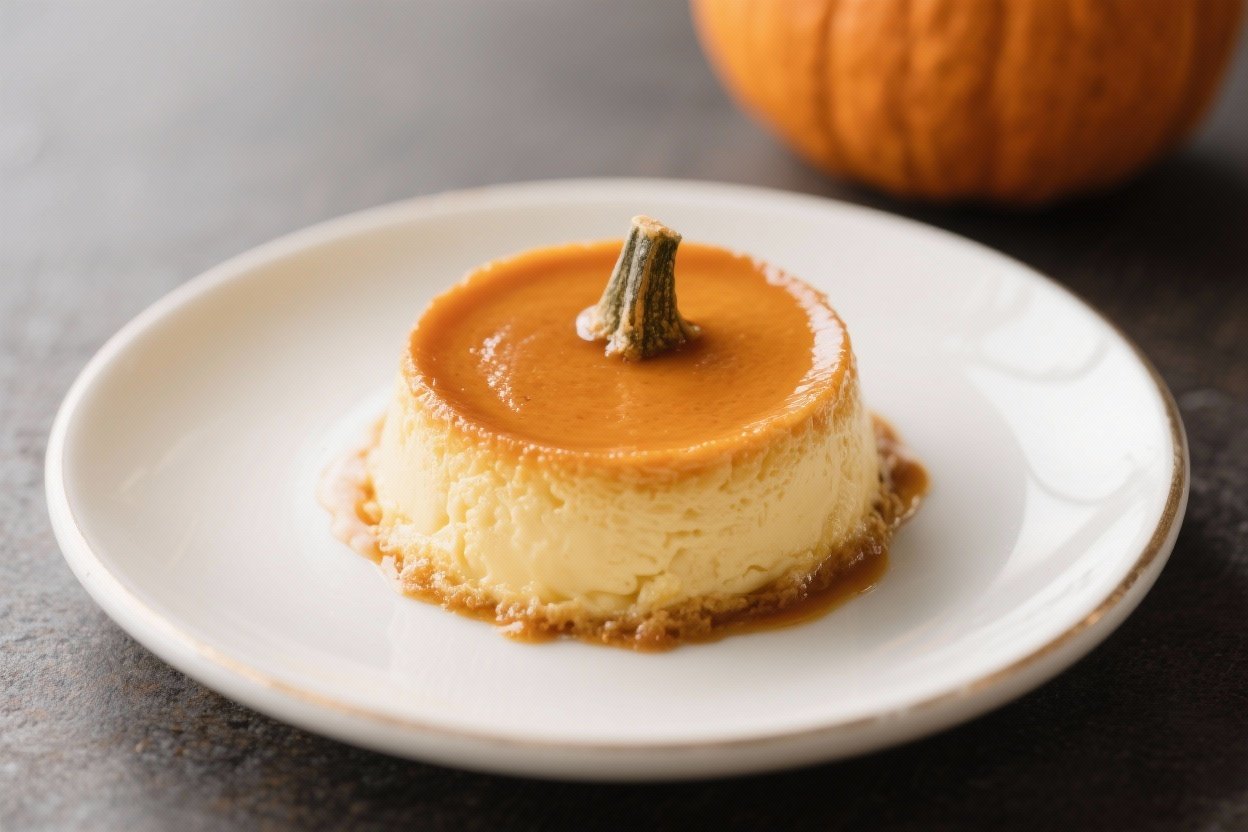
Pumpkin Custard That Makes Pie Jealous: Silky, Spiced, and Shockingly Easy
You want cozy without the crust drama? Meet Pumpkin Custard—the dessert that tastes like your favorite pie went to culinary school and stopped pretending. It’s smooth, rich, and ridiculously satisfying, with that warm pumpkin spice hit everyone “forgets” they love.
No soggy bottoms, no pastry anxiety. Just a spoon, a ramekin, and the smug feeling of pulling off a chef-level dessert with pantry staples.

The Secret Behind This Recipe
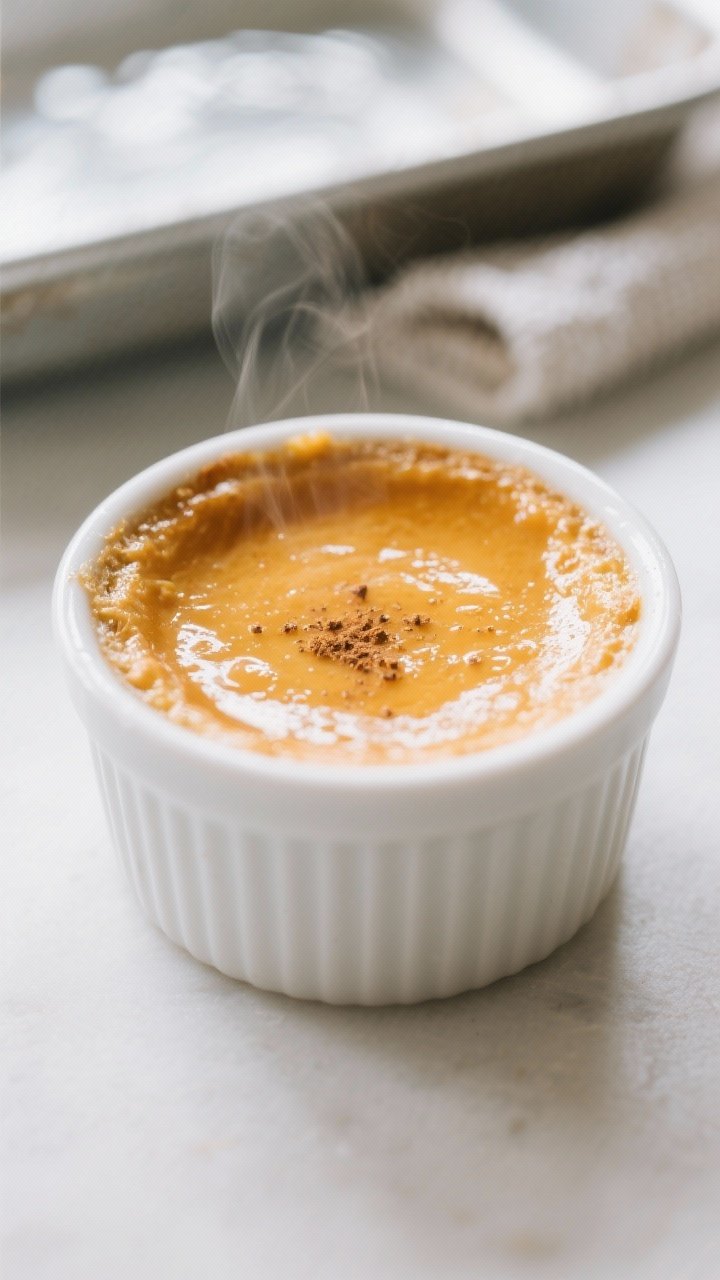
Pumpkin custard is all about balance: fat, sugar, and heat. The fat from cream (and sometimes milk) keeps the texture luscious; sugar sweetens and stabilizes; eggs set it into that sexy, spoonable gel.
The real trick? Slow heat and gentle bake so the eggs don’t scramble. A water bath (aka bain-marie) keeps the temperature even and gives you that glossy finish. Pumpkin puree brings body and moisture, while evaporated milk or heavy cream adds depth without making it too loose.
Spice blend matters too—cinnamon is the anchor, but a pinch of clove or black pepper lifts everything. And yes, salt. A pinch of salt wakes up the entire dessert like a tiny flavor alarm clock.
Ingredients
- 1 1/2 cups pumpkin puree (not pumpkin pie filling)
- 3 large eggs, room temperature
- 3/4 cup granulated sugar (or 1/2 cup sugar + 2 tbsp brown sugar for deeper flavor)
- 1 cup evaporated milk (or half-and-half; heavy cream for extra richness)
- 1 teaspoon pure vanilla extract
- 1 teaspoon ground cinnamon
- 1/2 teaspoon ground ginger
- 1/4 teaspoon ground nutmeg
- Pinch of ground cloves (optional but powerful)
- 1/4 teaspoon fine sea salt
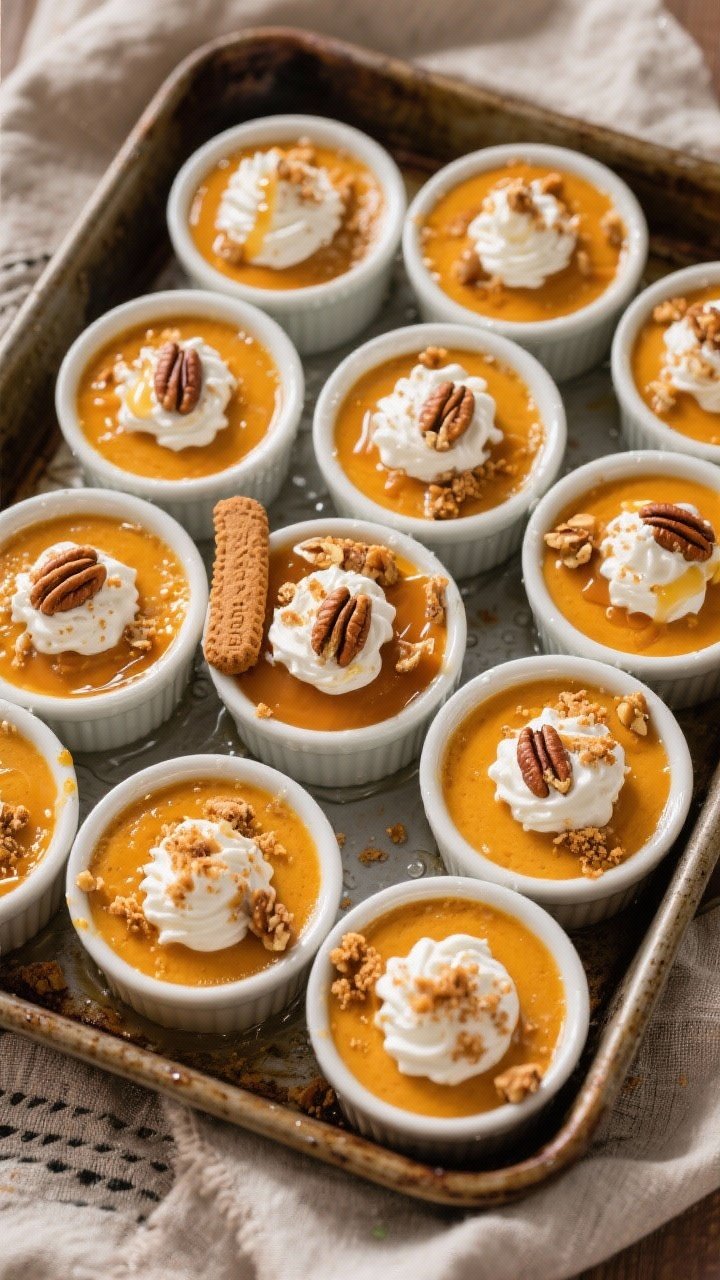
- For serving: lightly sweetened whipped cream, crushed gingersnaps or pecans (optional)
- For the pan: hot water for the water bath
Step-by-Step Instructions
- Preheat smart. Set your oven to 325°F (163°C). Arrange a rack in the middle.
Place a folded kitchen towel in a deep baking dish or roasting pan to keep ramekins from sliding and to buffer heat.
- Whisk the base. In a mixing bowl, whisk pumpkin, sugar, spices, and salt until smooth. Add eggs and whisk just until combined—no frothy bubbles. Stir in evaporated milk and vanilla until silky.
- Strain, if you’re fancy. For ultra-smooth custard, pour the mixture through a fine-mesh sieve into a pitcher.
It removes egg chalaza and spice clumps. Worth it, IMO.
- Fill the ramekins. Divide the custard among 6–8 ramekins (4–6 oz each). Place them in the prepared baking dish.
- Add the water bath. Pour hot water into the baking dish until it reaches halfway up the sides of the ramekins.
No splashing into the custard, please.
- Bake gently. Bake 30–45 minutes, depending on ramekin size. The centers should be just set with a slight jiggle—like gelatin on vacation. A knife inserted near the edge should come out mostly clean.
- Cool like a pro. Remove ramekins from the water bath and cool on a rack.
Chill at least 2 hours, preferably overnight, for the custard to fully set and flavors to mingle.
- Serve and flex. Top with whipped cream and crushed gingersnaps or toasted pecans. A drizzle of maple syrup? Not mad at it.
Keeping It Fresh
Leftovers keep 3–4 days in the fridge, tightly covered.
Custards love cold air about as much as you love Monday emails—so cover them to avoid drying out and fridge smells. For serving later, let them sit at room temp for 10–15 minutes to soften the texture. Freezing isn’t ideal; the texture can split.
If you must, freeze tightly wrapped ramekins for up to 1 month, thaw overnight in the fridge, and give a gentle whisk before topping. It won’t be perfect, but it will still taste like fall and feelings.
Benefits of This Recipe
- Crust-free convenience: All the pumpkin pie flavor without the pastry learning curve.
- Make-ahead friendly: Sets beautifully in the fridge; tastes better the next day.
- Portion control: Ramekins make serving easy and elegant. Also: built-in boundaries.
- Protein + fiber: Eggs provide protein; pumpkin adds fiber and vitamins A and C.
- Scales well: Double for a crowd, or bake in a 9-inch pie dish for fewer dishes.
Pitfalls to Watch Out For
- Overbaking = curdled texture. If it’s fully firm in the oven, it’ll be dry in the fridge.
Pull it when the center still jiggles.
- Skipping the water bath. Dry, cracked tops are a sign you’ve gone rogue. The bain-marie keeps heat gentle.
- Using pumpkin pie filling. It’s pre-sweetened and spiced; your custard will be chaotic.
- Over-whisking the eggs. Too much air creates bubbles and weird foam tops.
- Using cold ingredients. Room-temp eggs and dairy help the custard set evenly.
Mix It Up
- Maple Pumpkin Custard: Swap 1/4 cup sugar for pure maple syrup; reduce evaporated milk by 2 tablespoons.
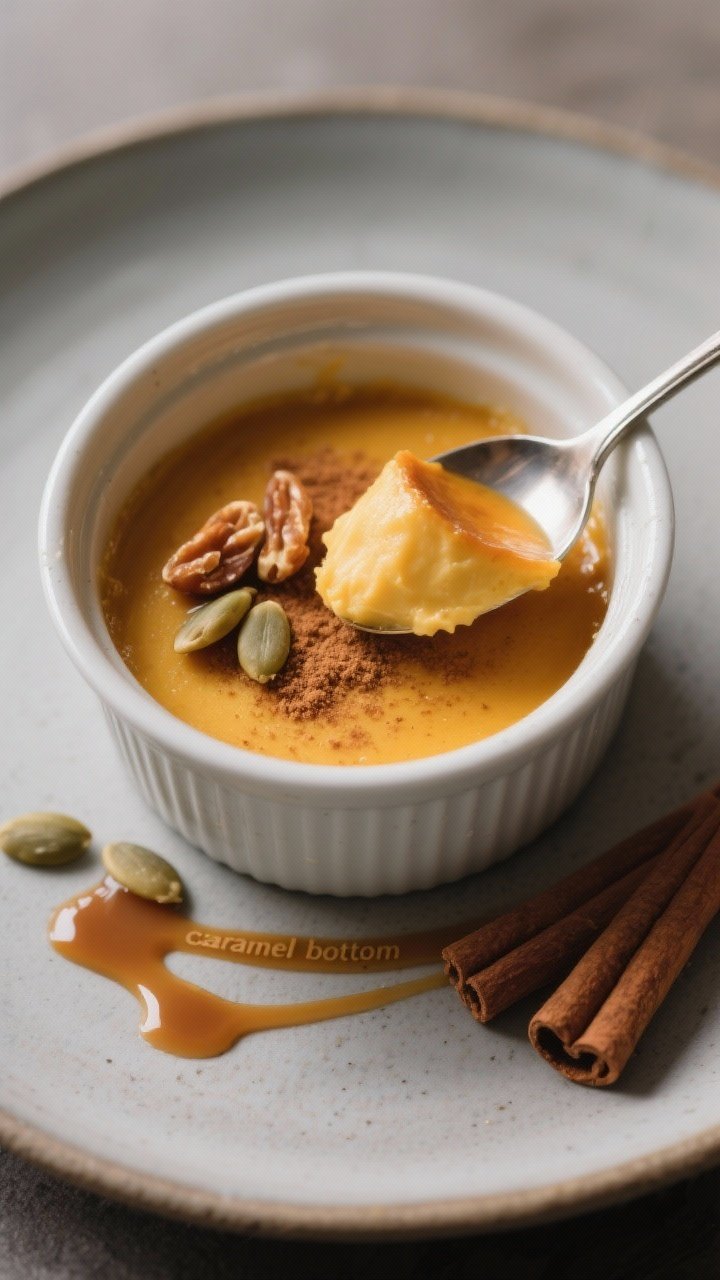
- Caramel Bottom: Pour 1–2 tablespoons warm caramel sauce into each ramekin before adding custard for flan vibes.
- Dairy-Free: Use full-fat coconut milk; add 1 extra egg yolk for structure. Coconut + pumpkin = surprisingly elite.
- Chai-Spiced: Replace cinnamon/ginger/nutmeg with 1 1/2 teaspoons chai spice blend.
- Bourbon Twist: Add 1 tablespoon bourbon and a pinch of black pepper.
Adults-only, clearly.
- Crunch Factor: Top with toasted pepitas, oat streusel, or crushed amaretti just before serving.
FAQ
Can I bake this as one big custard instead of individual ramekins?
Yes. Use a 9-inch pie dish or 8×8-inch baking dish, set in a water bath, and bake 45–60 minutes. Check for a slight center jiggle and avoid overbaking.
How do I know when it’s done?
Look for set edges and a soft wobble in the middle.
If you gently tap the ramekin and it waves like a calm pond, you’re good. If it sloshes, keep baking; if it’s rigid, it’s overdone.
Can I use fresh pumpkin instead of canned?
Absolutely, but roast and puree it until smooth, then drain excess water with cheesecloth. Fresh pumpkin can be wetter and lighter in flavor, so taste and adjust spices.
What’s the best milk or cream to use?
Evaporated milk gives classic texture and flavor.
Half-and-half is a great middle ground. Heavy cream makes it ultra-rich and silkier, but you may need a minute or two longer bake time.
Do I have to strain the custard?
No, but straining removes bits and gives a professional finish. It’s the tiny step that makes everyone ask, “Where did you buy this?”
Can I reduce the sugar?
You can drop it to 1/2 cup without wrecking texture.
Below that, the custard may be less stable and more egg-forward. Consider adding a touch more vanilla or spice to compensate.
Why did my custard crack?
Likely too hot or too long in the oven, or no water bath. Next time, lower the temp slightly and pull when the jiggle test passes.
Cooling too fast can also cause minor cracking.
My Take
Pumpkin custard is the dessert that secretly replaces pie at my table—less fuss, same nostalgic payoff. It’s proof that technique beats complexity: water bath, gentle bake, done. Honestly, it’s the kind of recipe that makes you feel like a culinary genius with a whisk and a dream.
Keep it classic, spike it with bourbon, or go coconut and chai; either way, it’s a keeper. And FYI, if you put crushed gingersnaps on top, prepare for repeat requests until spring.
Printable Recipe Card
Want just the essential recipe details without scrolling through the article? Get our printable recipe card with just the ingredients and instructions.