Baked Salmon With Garlic and Dill – Simple, Fresh, and Flavorful
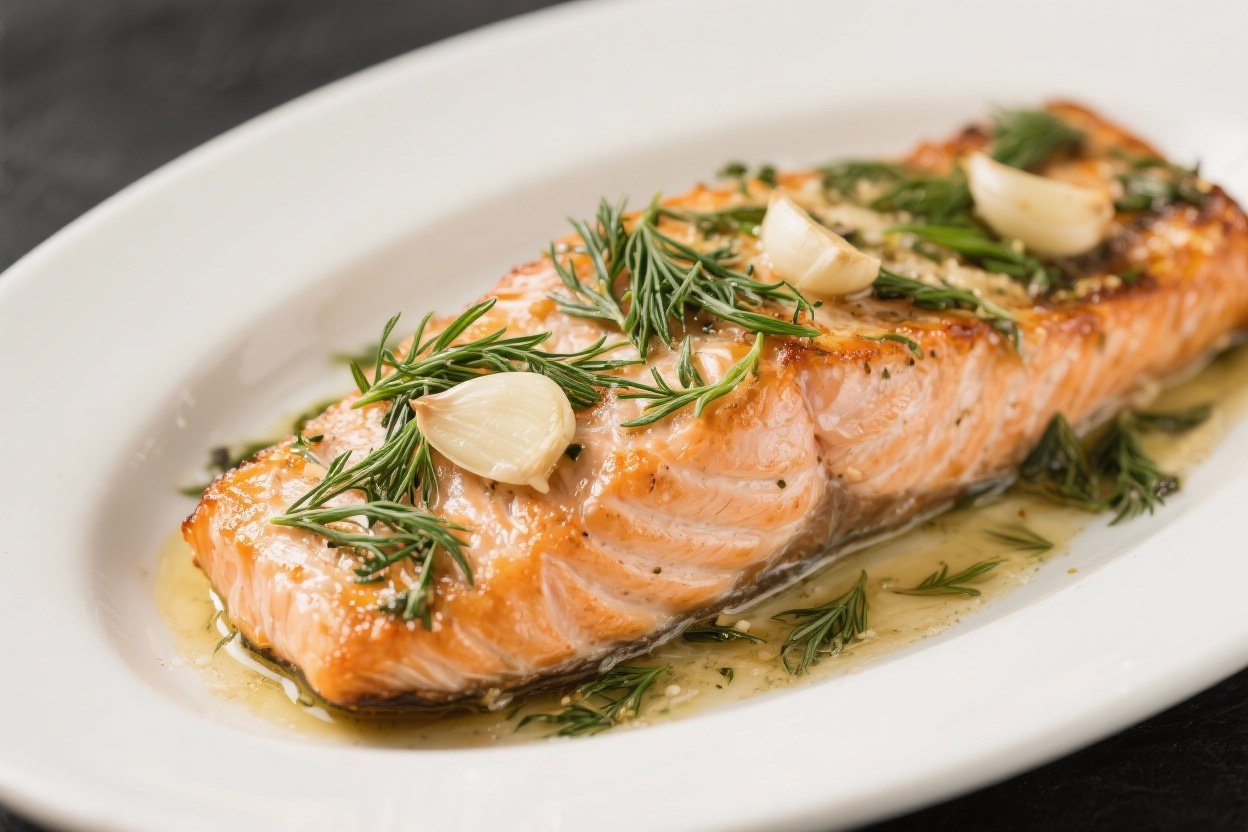
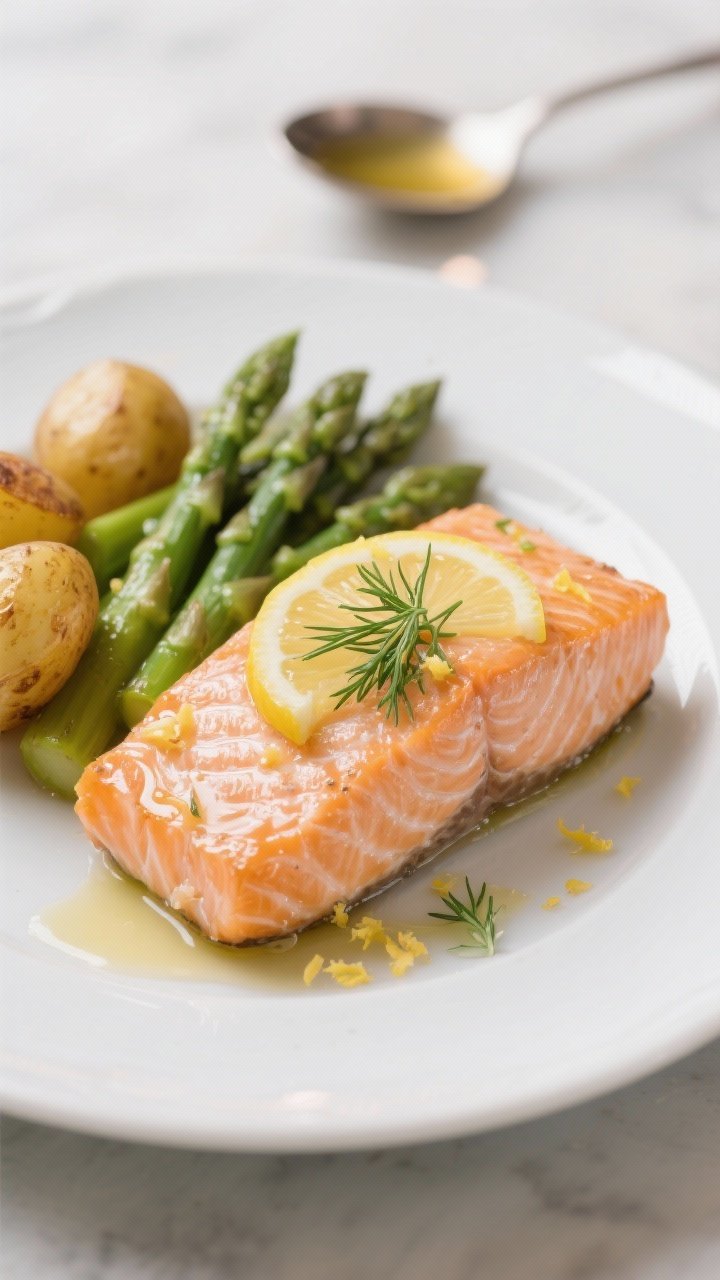
Few dinners feel as effortless and satisfying as baked salmon. This version leans on garlic, dill, lemon, and butter—classic partners that let the fish shine. The result is tender, flaky salmon with a bright, herby aroma and a buttery finish.
Need More Easy Dinner Ideas?
Get my FREE 7-Day Easy Dinner Reset and enjoy a full week of healthy dinners without the meal-planning stress.
It’s quick enough for a weeknight, but elegant enough for guests. Pair it with a green salad or roasted potatoes, and you’ve got a balanced meal with minimal fuss.
Ingredients
Method
- Preheat the oven. Set your oven to 400°F (200°C). Line a baking sheet with parchment or lightly oil a baking dish to prevent sticking.
- Prep the salmon. Pat the fillets dry with paper towels. Dry surfaces brown better and help the seasonings stick.
- Make the garlic-dill mixture. Finely mince the garlic and chop the dill. In a small bowl, combine garlic, dill, melted butter, olive oil, the zest of 1 lemon, and a squeeze of lemon juice. Stir in a pinch of salt and pepper. The mixture should be spoonable, not runny.
- Season the fish. Sprinkle the salmon evenly with salt and black pepper. Place the fillets skin-side down on the prepared sheet or dish.
- Add the flavor. Spoon the garlic-dill mixture over the top of each fillet, spreading it to the edges. If you like a hint of heat, dust with paprika or red pepper flakes. Lay a thin lemon slice on each piece if you’re using them.
- Bake until just done. Cook for 10–14 minutes, depending on thickness. Thinner tail pieces may take closer to 10 minutes; thicker center cuts may take 14. The salmon is ready when it flakes easily with a fork and is opaque on the outside with a slightly translucent center.
- Rest briefly. Let the salmon sit for 2–3 minutes after removing from the oven. This helps the juices settle and keeps it moist.
- Finish with lemon. Squeeze a little fresh lemon juice over the top right before serving for a bright finish.
- Serve. Pair with steamed asparagus, roasted broccoli, a simple salad, or herbed rice. A spoonful of the pan juices over the plate ties everything together.
Why This Recipe Works
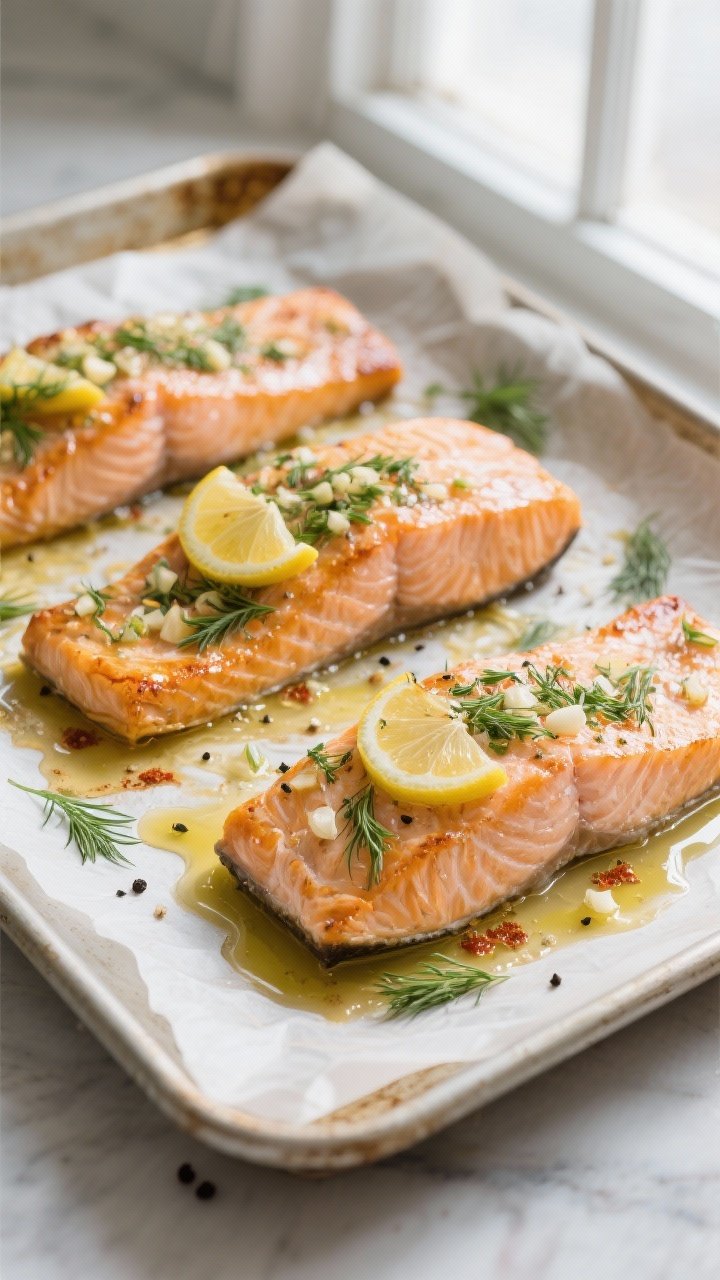
This recipe keeps the ingredient list short and the flavors clean, which is perfect for salmon. Garlic adds warmth, dill gives freshness, and lemon brings brightness that cuts through the richness.
Butter and olive oil work together to keep the fish moist and help the seasonings cling. Baking at a moderate temperature ensures even cooking and soft, flaky texture without drying out the edges. It’s a simple method that’s hard to mess up, even if you’re new to cooking fish.
Shopping List
- Salmon fillets (about 4 fillets, 5–6 ounces each), skin-on preferred
- Fresh garlic (3–4 cloves)
- Fresh dill (a small bunch)
- Lemon (1–2, for zest and juice)
- Unsalted butter (2–3 tablespoons)
- Olive oil (1–2 tablespoons)
- Kosher salt
- Freshly ground black pepper
- Optional: paprika or red pepper flakes for a little heat
- Optional: lemon slices for garnish
Instructions
- Preheat the oven. Set your oven to 400°F (200°C).
Line a baking sheet with parchment or lightly oil a baking dish to prevent sticking.
- Prep the salmon. Pat the fillets dry with paper towels. Dry surfaces brown better and help the seasonings stick.
- Make the garlic-dill mixture. Finely mince the garlic and chop the dill. In a small bowl, combine garlic, dill, melted butter, olive oil, the zest of 1 lemon, and a squeeze of lemon juice.
Stir in a pinch of salt and pepper. The mixture should be spoonable, not runny.
- Season the fish. Sprinkle the salmon evenly with salt and black pepper. Place the fillets skin-side down on the prepared sheet or dish.
- Add the flavor. Spoon the garlic-dill mixture over the top of each fillet, spreading it to the edges.
If you like a hint of heat, dust with paprika or red pepper flakes. Lay a thin lemon slice on each piece if you’re using them.
- Bake until just done. Cook for 10–14 minutes, depending on thickness. Thinner tail pieces may take closer to 10 minutes; thicker center cuts may take 14.
The salmon is ready when it flakes easily with a fork and is opaque on the outside with a slightly translucent center.
- Rest briefly. Let the salmon sit for 2–3 minutes after removing from the oven. This helps the juices settle and keeps it moist.
- Finish with lemon. Squeeze a little fresh lemon juice over the top right before serving for a bright finish.
- Serve. Pair with steamed asparagus, roasted broccoli, a simple salad, or herbed rice. A spoonful of the pan juices over the plate ties everything together.
Keeping It Fresh
Cooked salmon is best enjoyed right away, but it can be refrigerated safely for up to 3 days.
Let it cool, then store in an airtight container. Reheat gently—either in a low oven (275–300°F) for a few minutes or briefly in a covered skillet with a splash of water to keep it from drying out. If you’d rather not reheat, flake the cold salmon and use it in salads, wraps, or grain bowls.
For raw salmon, plan to cook within 1–2 days of purchase, and keep it chilled on the bottom shelf of the fridge.
Benefits of This Recipe
- Quick and approachable. From start to finish, dinner lands on the table in about 25 minutes.
- Nutritious. Salmon is rich in omega-3 fatty acids, protein, and essential nutrients, making this a wholesome option.
- Balanced flavor. Garlic and dill enhance without overpowering, while lemon keeps everything bright.
- Flexible serving options. Works with simple sides for a weeknight or a more polished spread when entertaining.
- Minimal cleanup. One pan, one small bowl, and you’re done.
What Not to Do
- Don’t overcook the salmon. Dry fish is tough and loses flavor. Pull it as soon as it flakes and looks slightly translucent in the center.
- Don’t skip drying the fillets. Moisture on the surface prevents seasoning from sticking and leads to steaming instead of baking.
- Don’t drown it in lemon juice before baking. Too much acid can make the surface mushy. Use a light squeeze before baking and finish with more at the end.
- Don’t bake straight from the fridge. If possible, let the salmon sit out for 10–15 minutes.
Even temperature means more even cooking.
- Don’t use old dill or garlic. Tired herbs and sprouted garlic taste dull or bitter. Freshness matters in a simple recipe.
Recipe Variations
- Yogurt-Dill Crust. Mix Greek yogurt with minced garlic, dill, lemon zest, and a pinch of salt. Spread over the salmon and bake.
You’ll get a tangy, creamy finish.
- Honey-Garlic-Dill. Add 1–2 teaspoons of honey to the garlic-dill mixture for sweet-savory depth. Great with a side of roasted carrots.
- Mustard-Dill. Whisk in 1 tablespoon of Dijon mustard for a gentle kick and extra richness.
- Herb Swap. No dill? Use parsley and chives, or a little tarragon for a soft anise note.
Keep the garlic and lemon the same.
- Sheet Pan Dinner. Add asparagus or thin potato slices to the pan. Toss the veggies with olive oil, salt, and pepper, then roast alongside the fish. Start the potatoes 10 minutes early if they’re thick.
- Citrus Twist. Try a mix of lemon and orange zest for a rounder citrus flavor.
FAQ
Never Wonder What's For Dinner Again
Save time, eat healthier, and take the stress out of dinner. Get a full week of easy healthy dinners delivered straight to your inbox.
How do I know when salmon is done?
The easiest signs are visual and tactile.
It should flake easily with a fork and look opaque on the outside with a slightly translucent center. If you’re using a thermometer, aim for about 125–130°F in the thickest part for moist, medium doneness.
Should I keep the skin on?
Yes, if possible. The skin protects the fish from direct heat and helps retain moisture.
You can slide a spatula between the flesh and skin after baking if you prefer not to eat it.
Can I use frozen salmon?
Absolutely. Thaw it in the refrigerator overnight or under cold running water in a sealed bag. Pat it very dry before seasoning to avoid excess moisture.
What if I don’t have fresh dill?
Use parsley, chives, or a small amount of dried dill (about 1 teaspoon).
Fresh herbs are best, but dried can work in a pinch when balanced with lemon zest.
Can I make this dairy-free?
Yes. Skip the butter and use all olive oil. Add a little extra lemon zest for richness and brightness without dairy.
How do I prevent a fishy smell in the house?
Use very fresh salmon, bake rather than pan-sear, and keep the oven clean.
Simmering a small pot of water with lemon slices or a cinnamon stick after cooking helps clear lingering aromas.
What sides pair well with this?
Roasted baby potatoes, quinoa, couscous, steamed asparagus, green beans, or a crisp cucumber salad all work great. Keep the sides light to match the freshness of the dish.
Can I grill instead of bake?
Yes. Place the salmon skin-side down on a well-oiled grill over medium heat.
Cover and cook 8–12 minutes, depending on thickness. Add the garlic-dill mixture right before grilling or brush on halfway through.
Wrapping Up
Baked Salmon with Garlic and Dill is the kind of recipe you’ll come back to often. It’s fast, flavorful, and reliably tender, with a short list of ingredients you probably already have.
Keep the method simple, lean on fresh dill and lemon, and avoid overcooking. With a few smart touches, you’ll have a bright, satisfying dinner that feels special without the stress. Enjoy it tonight, and save the leftovers for tomorrow’s lunch.
Printable Recipe Card
Want just the essential recipe details without scrolling through the article? Get our printable recipe card with just the ingredients and instructions.
Loved This Recipe?
If you're looking for more simple, healthy dinners your family will actually eat, grab my FREE 7-Day Easy Dinner Reset. You'll get 7 easy dinner recipes, simple grocery lists, and a done-for-you plan that takes the stress out of mealtime.