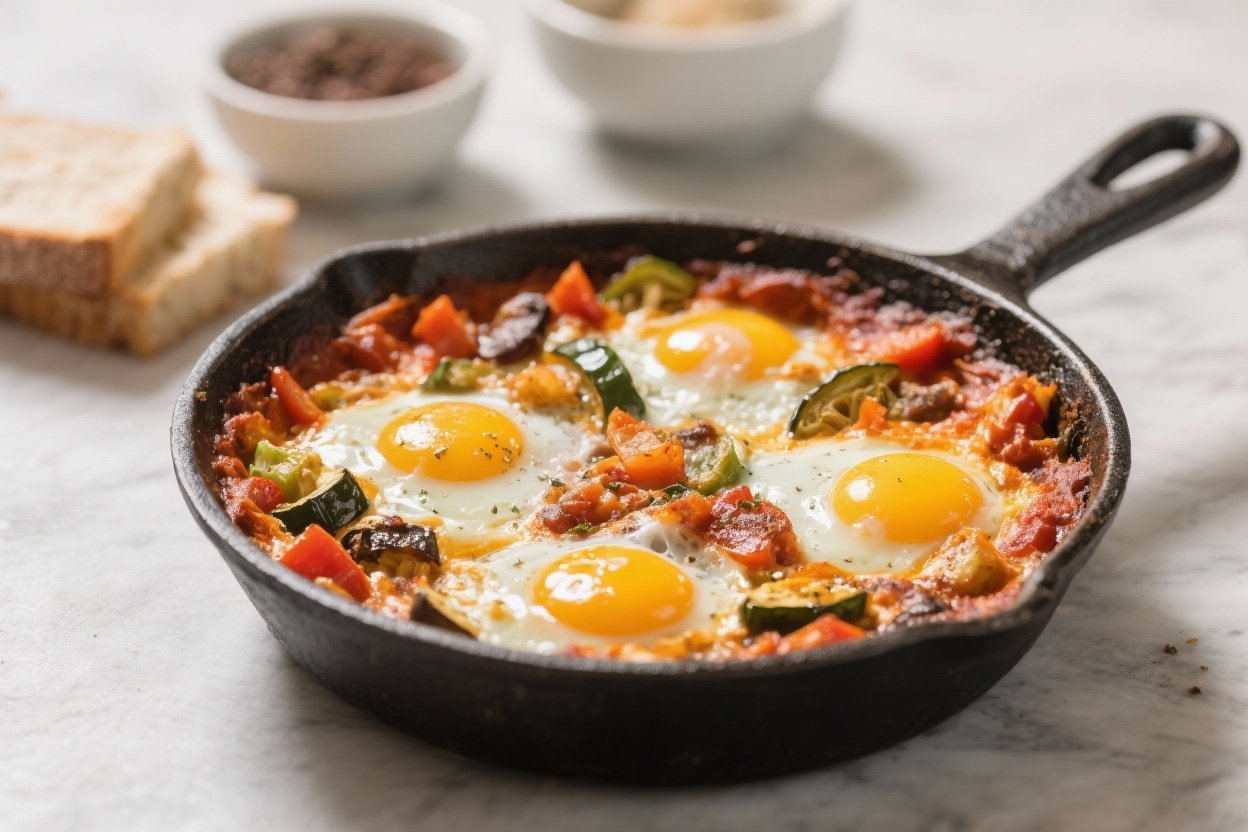
High-Protein Veggie Shakshuka With Eggs – A Cozy, Satisfying Skillet Meal
This veggie-packed shakshuka brings big flavor, great texture, and plenty of protein in one pan. It’s the kind of meal you can make on a weeknight and still feel like you treated yourself. Tender peppers, tomatoes, and leafy greens simmer into a rich sauce, then eggs poach right on top.
Add a handful of beans for extra protein and creaminess. It’s hearty, colorful, and perfect for breakfast, lunch, or a light dinner.
Overeating is a pattern. This helps you fix that problem. A quick reset for cravings, snacking, and “I’ll start tomorrow” moments.
Built for busy home cooks who want real-life structure. Simple steps that fit meal prep, family dinners, and late-night snack attacks.
What Makes This Special
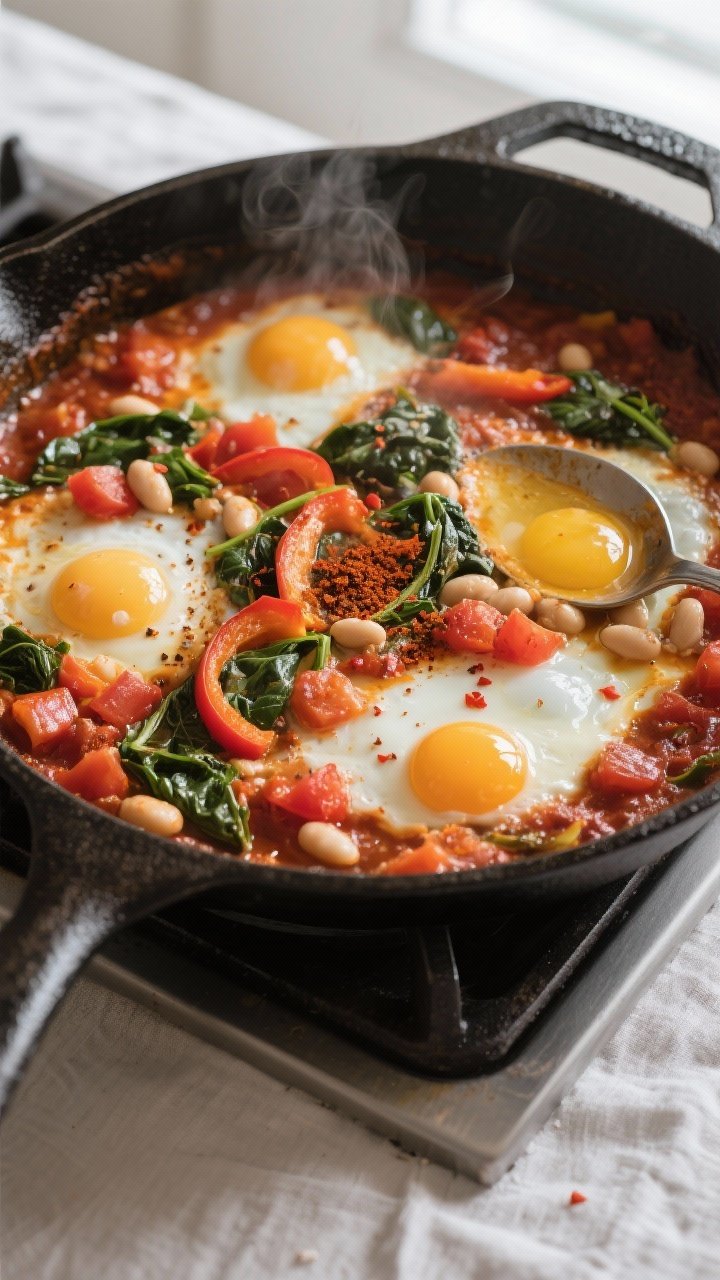
This version keeps all the cozy shakshuka comfort while boosting protein in a smart, balanced way. The eggs do the heavy lifting, but we also fold in white beans for a gentle, creamy texture that blends into the sauce.
You’ll get a full serving of vegetables in every portion, plus warming spices that taste like they’ve been simmering all afternoon. Everything cooks in one pan, and it’s flexible—use what you have and adjust the spice level to your taste.
What You’ll Need
- Olive oil: 2 tablespoons
- Yellow onion: 1 medium, diced
- Bell peppers: 2 (any color), sliced
- Garlic: 3–4 cloves, minced
- Tomato paste: 1 tablespoon
- Canned diced tomatoes: 1 can (14–15 oz)
- Crushed tomatoes or passata: 1 cup, for extra sauciness
- Ground cumin: 1 teaspoon
- Smoked paprika: 1 teaspoon
- Ground coriander: 1/2 teaspoon
- Red pepper flakes or harissa: 1/4–1/2 teaspoon, to taste
- Baby spinach or chopped kale: 2 cups packed
- Cooked white beans or chickpeas: 1 cup, drained and rinsed
- Eggs: 4–6, depending on serving size
- Salt and black pepper: to taste
- Fresh herbs: chopped cilantro, parsley, or dill, for garnish
- Optional toppers: crumbled feta, diced avocado, lemon wedges
- For serving: crusty bread, pita, or warm tortillas
How to Make It
- Warm the pan: Heat olive oil in a large, wide skillet over medium heat. A lid is helpful for later.
- Sauté the aromatics: Add onion and a pinch of salt.
Cook 4–5 minutes, until translucent. Stir in bell peppers and cook 3–4 minutes more until slightly softened.
- Add garlic and spices: Stir in garlic, cumin, smoked paprika, coriander, and red pepper flakes or harissa. Cook 30–60 seconds until fragrant.
- Build the sauce: Mix in tomato paste and cook 1 minute to caramelize.
Add diced tomatoes and crushed tomatoes. Season with salt and pepper. Simmer 8–10 minutes, stirring occasionally, until thick and glossy.
- Boost with veggies and beans: Stir in spinach or kale and the white beans.
Cook 2–3 minutes until the greens wilt and beans warm through. Taste and adjust seasoning.
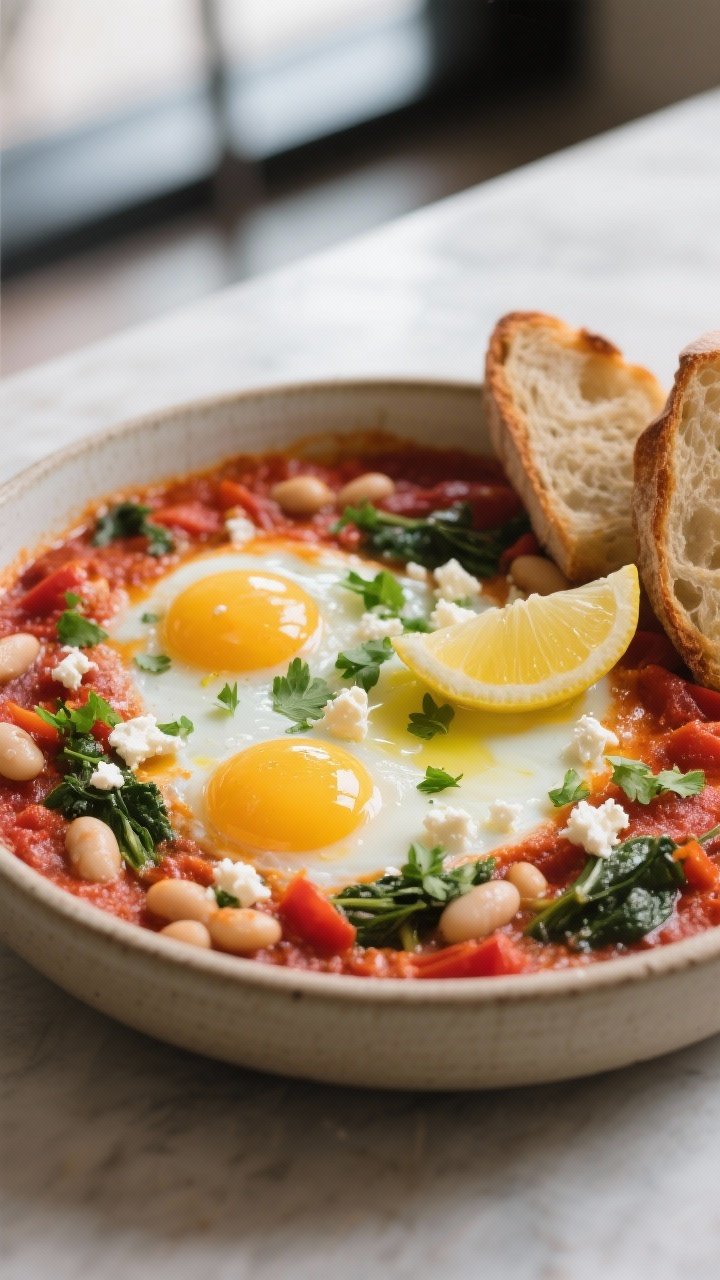
- Create wells for eggs: Use a spoon to make 4–6 small indentations in the sauce. Crack an egg into each well.
- Cover and cook: Reduce heat to medium-low, cover, and cook 5–8 minutes, until whites are set and yolks are at your preferred doneness.
For runny yolks, start checking at 5 minutes.
- Finish and garnish: Remove from heat. Sprinkle with herbs and, if using, crumbled feta. Add a squeeze of lemon for brightness.
- Serve: Spoon into bowls and serve with warm bread or pita to scoop up the sauce.
How to Store
- Refrigerate: Transfer leftovers to an airtight container and store for up to 3 days.
For best texture, cook only the eggs you plan to eat and store extra sauce separately.
- Reheat: Warm the sauce gently on the stovetop over low heat. Crack fresh eggs into the reheated sauce and cook as directed, or reheat already-cooked eggs covered until warmed through.
- Freeze: Freeze the veggie-bean tomato base (without eggs) for up to 2 months. Thaw overnight in the fridge, reheat, and add eggs fresh.
Health Benefits
- High-quality protein: Eggs deliver complete protein, supporting muscle repair and satiety.
White beans or chickpeas add plant protein and fiber for a longer-lasting, balanced meal.
- Fiber-rich vegetables: Tomatoes, peppers, and leafy greens pack vitamins A, C, and K, plus antioxidants like lycopene.
- Healthy fats: Olive oil provides heart-healthy monounsaturated fats that help absorb fat-soluble vitamins.
- Lower in refined carbs: The dish is naturally low in refined carbohydrates, especially if you skip or limit bread on the side.
- Customizable for dietary needs: You can keep sodium moderate, control spice level, and add dairy or keep it dairy-free without losing flavor.
Common Mistakes to Avoid
- Rushing the sauce: If the tomato base is too watery, the eggs will spread and overcook. Give the sauce time to thicken before adding eggs.
- Overcooking the eggs: Leave the yolks slightly runny if you like a silky sauce. Check early and use residual heat to finish.
- Skipping seasoning: Tomatoes need salt.
Taste at each stage and adjust so the flavors pop.
- Too much liquid from greens: If using kale or chard, chop finely and cook down. For spinach, add in batches and let moisture evaporate.
- Crowding the eggs: Space the wells so the whites have room to set cleanly.
Variations You Can Try
- Spicy harissa shakshuka: Stir 1–2 tablespoons harissa into the sauce and finish with a dollop of yogurt.
- Mediterranean twist: Add olives, artichoke hearts, and a sprinkle of oregano. Use feta and parsley on top.
- Green shakshuka: Swap tomatoes for sautéed leeks, zucchini, spinach, and herbs.
Add a splash of vegetable broth and a squeeze of lemon.
- Mushroom boost: Sauté sliced mushrooms with the onion for extra umami and texture.
- Extra-high protein: Add 1/2 cup crumbled firm tofu or edamame along with beans, or serve with Greek yogurt on the side.
- Smoky chipotle: Use chipotle in adobo instead of red pepper flakes and top with cilantro and avocado.
FAQ
Can I make this without eggs?
Yes. Add more beans or crumble in firm tofu. Simmer until the sauce thickens and the tofu warms through.
You can also crack in plant-based egg alternatives and cook according to package directions.
What’s the best pan to use?
A large, heavy skillet (10–12 inches) that holds heat well works best. Cast iron or enameled cast iron is ideal. Just make sure it has a lid or use a sheet pan to cover.
How do I keep the eggs from getting rubbery?
Lower the heat and cover.
Start checking at 5 minutes and pull the pan off the heat when whites are set but yolks still jiggle. Residual heat will continue to cook them slightly.
Can I use fresh tomatoes instead of canned?
Absolutely. Use about 4–5 ripe tomatoes, chopped, and cook them down longer to concentrate the flavor.
If they’re not very sweet, add a pinch of sugar or a splash of balsamic to balance acidity.
Is it spicy?
It can be as mild or as spicy as you like. Start with a small amount of red pepper flakes or harissa and add more once the sauce is simmering and you can taste it.
What should I serve it with?
Warm pita, crusty sourdough, or naan are classic. For a lighter option, serve over quinoa or cauliflower rice.
A crisp cucumber salad on the side is a great contrast.
How many eggs should I plan per person?
One to two eggs per person is typical. If you’re serving the shakshuka with hearty sides, one egg per person can be enough.
Can I meal prep this?
Yes, prep the sauce ahead and store it in the fridge for up to 3 days or freeze it. Reheat the sauce and cook fresh eggs just before serving for the best texture.
Why add beans to shakshuka?
They increase protein and fiber without overpowering the dish.
They also make the sauce feel creamier and more filling, perfect for a complete meal.
How do I brighten the flavor at the end?
A squeeze of lemon, extra herbs, and a drizzle of good olive oil can lift the whole dish. Taste and add a pinch of salt if needed.
Final Thoughts
High-Protein Veggie Shakshuka with Eggs is a go-to skillet that checks every box: fast, nourishing, and deeply satisfying. It’s easy to customize with what’s in your fridge, and the one-pan method keeps cleanup simple.
Whether you serve it for brunch or a cozy dinner, it feels like comfort food with a nutritious edge. Make it once, and it’ll become a steady favorite in your rotation.