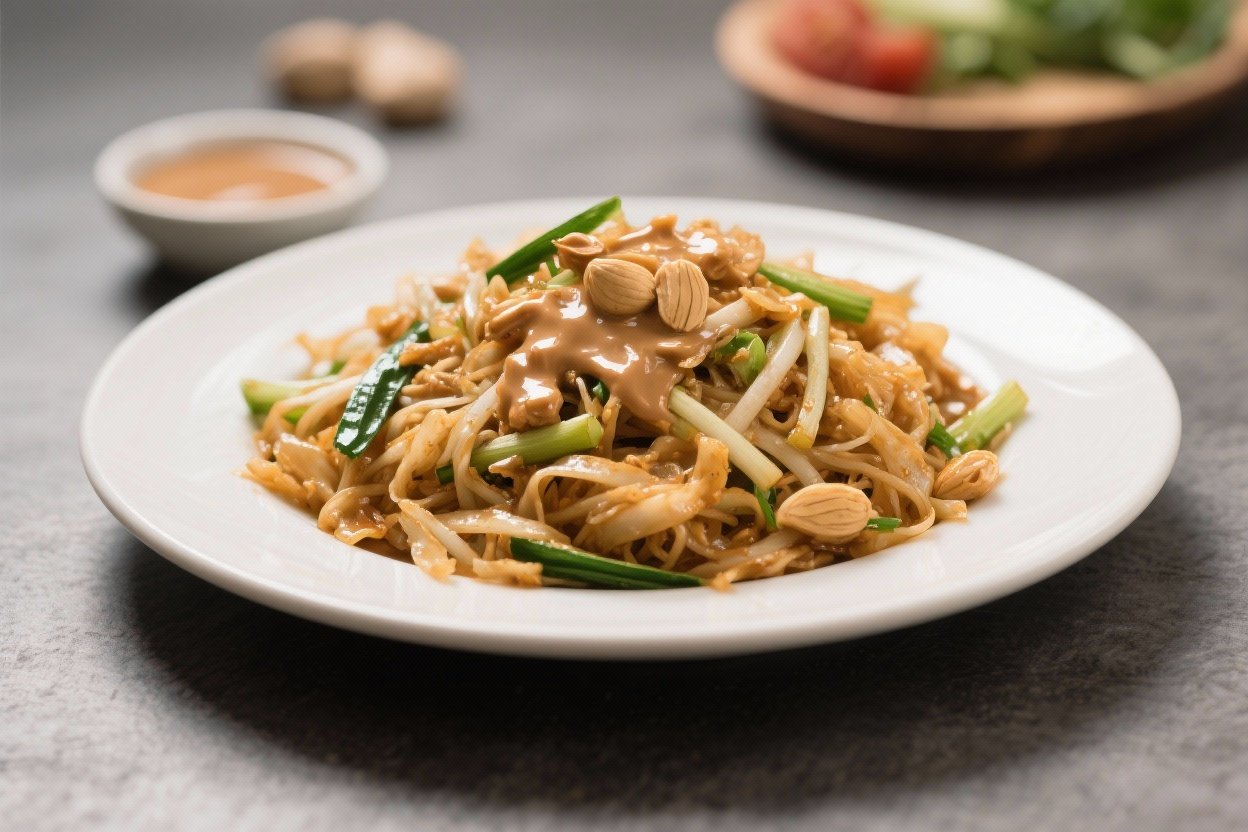
Vegan Pad Thai With Peanut Sauce – A Flavorful, Weeknight-Friendly Stir-Fry
Pad Thai is one of those dishes that feels like a treat but comes together quickly once you know the flow. This vegan version brings the same tangy-sweet flavor you love, plus a creamy peanut sauce that clings to every strand. It’s packed with veggies, protein-rich tofu, and a pop of lime to wake everything up.
If you’ve been craving takeout comfort with a plant-based twist, this hits the spot. Grab your wok or a large skillet, and let’s make dinner that tastes like a win.
Ingredients
Method
- Soak or cook the noodles. Prepare rice noodles according to package directions until just shy of tender. Rinse under cold water to stop cooking and prevent sticking. Toss with a teaspoon of oil and set aside.
- Make the sauce. In a bowl, whisk peanut butter, soy sauce, lime juice, tamarind (if using), maple syrup, rice vinegar, chili sauce, sesame oil, and enough warm water to form a pourable, creamy sauce. Taste and adjust: more lime for tang, soy for salt, maple for sweetness, chili for heat.
- Prep the tofu. Pat tofu dry. Cut into 1/2-inch cubes. Season lightly with salt or a splash of soy.
- Crisp the tofu. Heat 1–2 tablespoons oil in a large nonstick skillet or wok over medium-high heat. Add tofu in a single layer. Cook 6–8 minutes, turning occasionally, until golden on most sides. Transfer to a plate.
- Stir-fry aromatics and veggies. Add another drizzle of oil. Stir-fry garlic and scallion whites for 30 seconds until fragrant. Add your veggies (start with the firmest, like broccoli, then peppers and carrots, finishing with quick-cooking sprouts or snow peas). Cook 3–4 minutes until crisp-tender.
- Combine noodles and tofu. Add noodles and tofu back to the pan. Toss to warm through.
- Add the peanut sauce. Pour in most of the sauce and toss vigorously over medium heat until everything is coated and glossy, 1–2 minutes. If it seems dry, add a splash of water or the remaining sauce. Remove from heat.
- Finish and serve. Stir in scallion greens and half the peanuts. Plate and top with remaining peanuts, cilantro, and lime wedges. Serve immediately with extra chili sauce on the side.
Overeating is a pattern. This helps you fix that problem. A quick reset for cravings, snacking, and “I’ll start tomorrow” moments.
Built for busy home cooks who want real-life structure. Simple steps that fit meal prep, family dinners, and late-night snack attacks.
What Makes This Special
This recipe layers texture and flavor the way a great stir-fry should. You’ll get chewy rice noodles, crisp-tender veggies, and golden tofu tossed in a silky peanut-lime sauce.
The sauce blends classic Pad Thai notes—tamarind, lime, and umami—with a gentle peanut richness for extra body. It’s weeknight-friendly, adaptable to what you have, and naturally dairy-free and egg-free.
Plus, it keeps the spirit of Pad Thai while staying accessible. No hard-to-find ingredients required—you can use tamarind paste if you have it, or a simple lime-soy-maple combo if you don’t. It’s the kind of dish that makes eating more plants feel easy and satisfying.
What You’ll Need
- Rice noodles: 8 ounces, flat Pad Thai-style or any medium-width rice noodles
- Extra-firm tofu: 14 ounces, pressed and cubed
- Neutral oil: 2–3 tablespoons (avocado, canola, or peanut oil)
- Garlic: 3 cloves, minced
- Scallions: 4, sliced (whites and greens separated)
- Vegetables: 2 cups total (such as bell pepper strips, shredded carrots, bean sprouts, snow peas, or broccoli florets)
- Roasted peanuts: 1/3 cup, roughly chopped
- Fresh cilantro: Small handful, chopped
- Lime: 1–2, cut into wedges
For the Peanut Pad Thai Sauce:
- Creamy peanut butter: 1/3 cup
- Soy sauce or tamari: 3 tablespoons
- Lime juice: 2 tablespoons (plus more to taste)
- Tamarind paste: 1 tablespoon (optional but great for classic tang)
- Maple syrup or brown sugar: 1–2 tablespoons
- Rice vinegar: 1 tablespoon
- Sriracha or chili garlic sauce: 1–2 teaspoons, to taste
- Warm water: 2–4 tablespoons to thin
- Toasted sesame oil: 1 teaspoon (optional for aroma)
Optional add-ins: Grated ginger, red pepper flakes, vegan fish sauce, or a splash of coconut aminos for extra umami.
Instructions
- Soak or cook the noodles. Prepare rice noodles according to package directions until just shy of tender.
Rinse under cold water to stop cooking and prevent sticking. Toss with a teaspoon of oil and set aside.
- Make the sauce. In a bowl, whisk peanut butter, soy sauce, lime juice, tamarind (if using), maple syrup, rice vinegar, chili sauce, sesame oil, and enough warm water to form a pourable, creamy sauce. Taste and adjust: more lime for tang, soy for salt, maple for sweetness, chili for heat.
- Prep the tofu. Pat tofu dry.
Cut into 1/2-inch cubes. Season lightly with salt or a splash of soy.
- Crisp the tofu. Heat 1–2 tablespoons oil in a large nonstick skillet or wok over medium-high heat. Add tofu in a single layer.
Cook 6–8 minutes, turning occasionally, until golden on most sides. Transfer to a plate.
- Stir-fry aromatics and veggies. Add another drizzle of oil. Stir-fry garlic and scallion whites for 30 seconds until fragrant.
Add your veggies (start with the firmest, like broccoli, then peppers and carrots, finishing with quick-cooking sprouts or snow peas). Cook 3–4 minutes until crisp-tender.
- Combine noodles and tofu. Add noodles and tofu back to the pan. Toss to warm through.
- Add the peanut sauce. Pour in most of the sauce and toss vigorously over medium heat until everything is coated and glossy, 1–2 minutes.
If it seems dry, add a splash of water or the remaining sauce. Remove from heat.
- Finish and serve. Stir in scallion greens and half the peanuts. Plate and top with remaining peanuts, cilantro, and lime wedges.
Serve immediately with extra chili sauce on the side.
How to Store
- Fridge: Store leftovers in an airtight container for up to 3 days. The noodles will absorb sauce, so add a splash of water or lime juice when reheating.
- Reheat: Warm in a skillet over medium with a tablespoon of water, tossing until loosened and hot. Microwave works too; stir halfway.
- Make-ahead tips: Keep sauce, prepped veggies, and cooked tofu separate.
Combine and heat with freshly softened noodles for best texture.
- Freezer: Not ideal; rice noodles can turn mushy after freezing and thawing.
Health Benefits
- Plant protein: Tofu and peanuts provide satisfying protein that supports muscle repair and fullness.
- Healthy fats: Peanut butter adds monounsaturated fats, which are linked to heart health when enjoyed in moderation.
- Fiber and micronutrients: Colorful veggies deliver fiber, vitamin C, beta-carotene, and antioxidants.
- Gluten-free friendly: Using rice noodles and tamari makes this naturally gluten-free for those who need it.
- Balanced meal: You get carbs from noodles, protein from tofu and peanuts, and plenty of veg—great for steady energy.
Pitfalls to Watch Out For
- Mushy noodles: Overcooking is the main culprit. Cook just to al dente, rinse, and toss with a touch of oil.
- Clumpy sauce: Thin the sauce with warm water and add it to the pan off direct high heat at first, then toss over medium.
- Soggy tofu: Press tofu well and give it space in the pan so it browns. Crowding steams it.
- Flat flavor: Balance is key.
If it tastes dull, add more lime for brightness, a splash of soy for salt, or a touch of maple for sweetness.
- Overstuffed pan: Stir-fry in batches if needed to keep veggies crisp and noodles bouncy.
Variations You Can Try
- Nut-free: Swap peanut butter for sunflower seed or tahini, and use toasted seeds instead of peanuts.
- Extra protein: Add edamame or tempeh cubes along with tofu, or use high-protein tofu.
- Low-carb-ish: Replace half the noodles with spiralized zucchini or cabbage ribbons.
- Spicy version: Stir in chili crisp or extra sriracha, and finish with sliced fresh chilies.
- Tangy tamarind: Double the tamarind for a sharper, more traditional sourness if you love that classic Pad Thai snap.
- Herb-forward: Add Thai basil and mint with the cilantro for a bright, garden-fresh finish.
FAQ
Can I make this without tamarind?
Yes. Use extra lime juice and a bit more maple syrup to mimic the tang-sweet balance. A teaspoon of rice vinegar can also help round it out.
What kind of peanut butter works best?
Natural creamy peanut butter is ideal.
If yours is thick, whisk with warm water to loosen. If using sweetened peanut butter, reduce the maple syrup.
How do I keep noodles from sticking?
Rinse cooked rice noodles under cold water, shake dry, and toss with a teaspoon of oil. Add them to the pan only when the sauce and veggies are ready, then toss quickly.
Is there a substitute for tofu?
Tempeh, seitan (if not gluten-free), or edamame work well.
For a whole-food option, add chickpeas and increase the veggies.
Can I use another nut?
Absolutely. Almond butter or cashew butter makes a great sauce, and you can top with chopped cashews or almonds instead of peanuts.
How spicy is this?
It’s mild by default. Adjust heat with sriracha, chili garlic sauce, or red pepper flakes to your liking.
What pan should I use?
A wok is great for high-heat tossing, but a large nonstick or well-seasoned stainless-steel skillet works fine.
The key is space and steady medium-high heat.
Can I add pineapple?
Sure. A small handful of fresh pineapple chunks can add a sweet-tart pop. Just keep the sauce balanced by tasting and adjusting lime and soy.
Wrapping Up
Vegan Pad Thai with Peanut Sauce delivers big, balanced flavor with ingredients you likely have on hand.
It’s adaptable, quick, and satisfying—perfect for busy nights or casual dinners with friends. Keep the sauce balanced, the tofu crisp, and the noodles chewy, and you’ll have a reliable go-to that tastes like takeout in the best way. Squeeze a little extra lime on top, and enjoy every bite.
Printable Recipe Card
Want just the essential recipe details without scrolling through the article? Get our printable recipe card with just the ingredients and instructions.