Baked Honey Mustard Salmon – Easy, Flavorful, Weeknight-Friendly
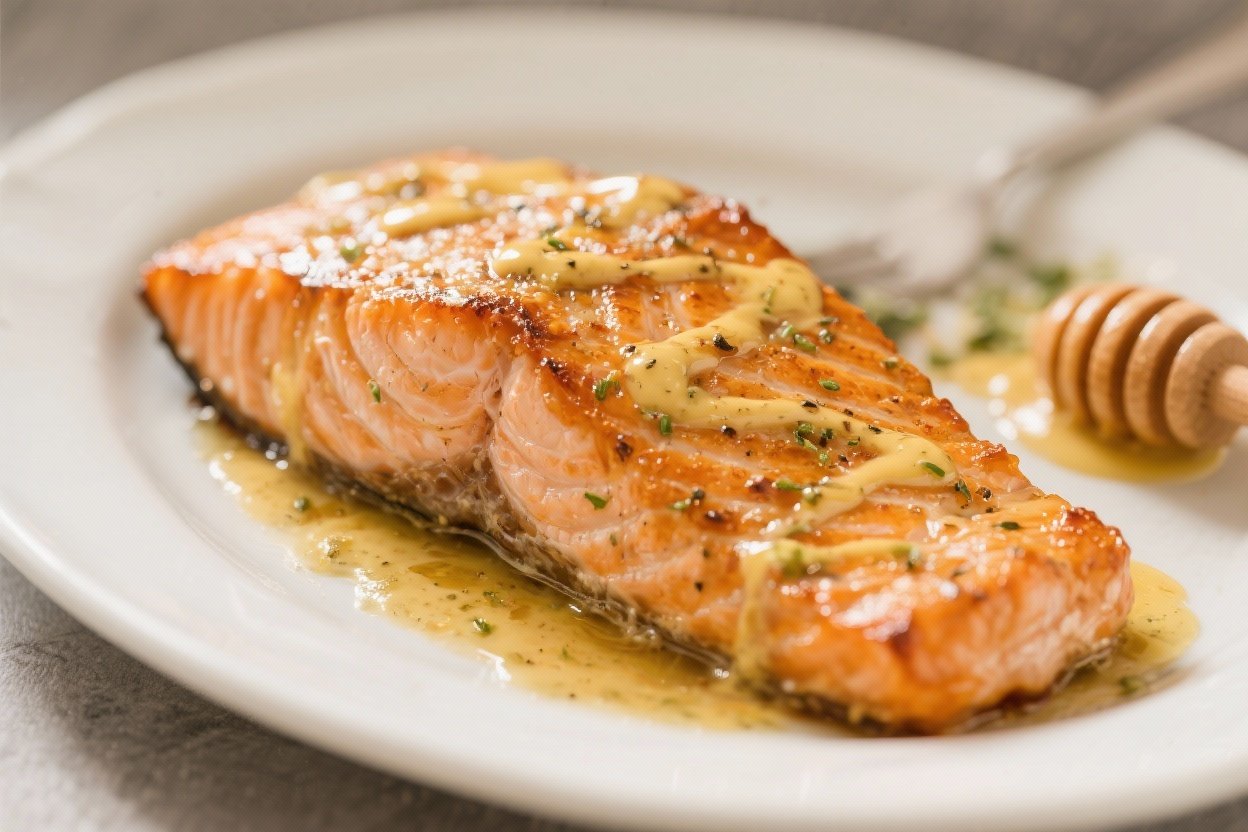
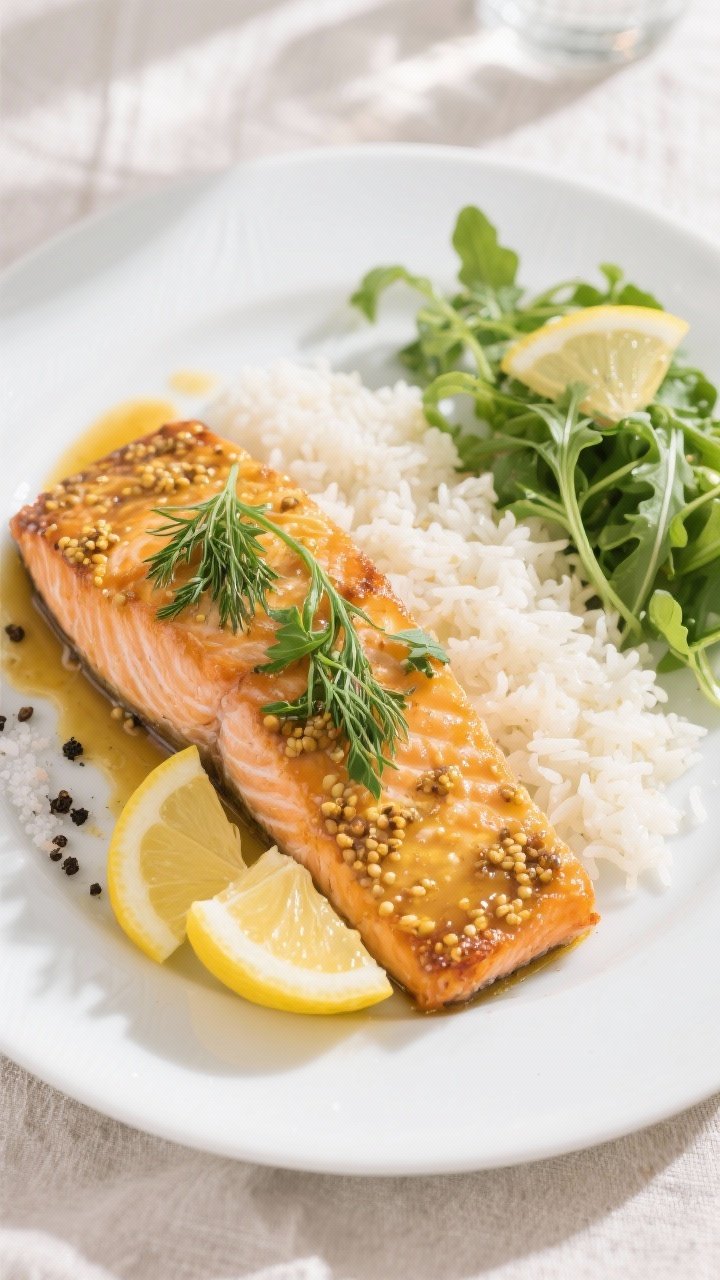
Baked honey mustard salmon is one of those meals that feels special but asks almost nothing from you. The sauce comes together in a minute, the fish cooks fast, and the result tastes like you put in way more effort than you did. It’s sweet, tangy, and savory with just enough heat to keep things interesting.
Need More Easy Dinner Ideas?
Get my FREE 7-Day Easy Dinner Reset and enjoy a full week of healthy dinners without the meal-planning stress.
Serve it with roasted veggies, rice, or a simple salad, and you’ve got dinner done. If you’re new to cooking salmon, this is a very forgiving recipe that’s hard to mess up.
Ingredients
Method
- Preheat and prep: Heat the oven to 400°F (200°C). Line a baking sheet with parchment or lightly oil a baking dish to prevent sticking.
- Pat the salmon dry: Use paper towels to dry the fillets. This helps the sauce stick and promotes better browning. Place the salmon on the prepared pan, skin-side down if using skin-on.
- Make the sauce: In a small bowl, whisk together Dijon mustard, whole-grain mustard (if using), honey, minced garlic, lemon zest, 1 tablespoon lemon juice, olive oil, a good pinch of salt, and black pepper. Add smoked paprika and red pepper flakes if you like a little warmth.
- Taste and adjust: The sauce should be balanced—sweet, tangy, and savory. Add a bit more honey if it’s too sharp or another squeeze of lemon if it’s too sweet.
- Coat the salmon: Spoon the sauce over the salmon, spreading it into an even layer. Reserve a tablespoon or two if you want a finishing drizzle after baking.
- Bake: Bake for 10 to 14 minutes, depending on thickness. A general guide is about 4 to 6 minutes per 1/2-inch of thickness. The salmon is done when it flakes easily and the center is just turning opaque.
- Optional broil: For a lightly caramelized top, switch to broil for the last 1 to 2 minutes. Watch closely so the honey doesn’t burn.
- Rest and finish: Let the salmon rest for 2 minutes. Spoon on any reserved sauce, then sprinkle with chopped parsley or dill and an extra squeeze of lemon if you like.
- Serve: Pair with roasted asparagus, green beans, or a crisp salad. Rice, quinoa, or mashed potatoes also work well to catch the extra sauce.
What Makes This Special
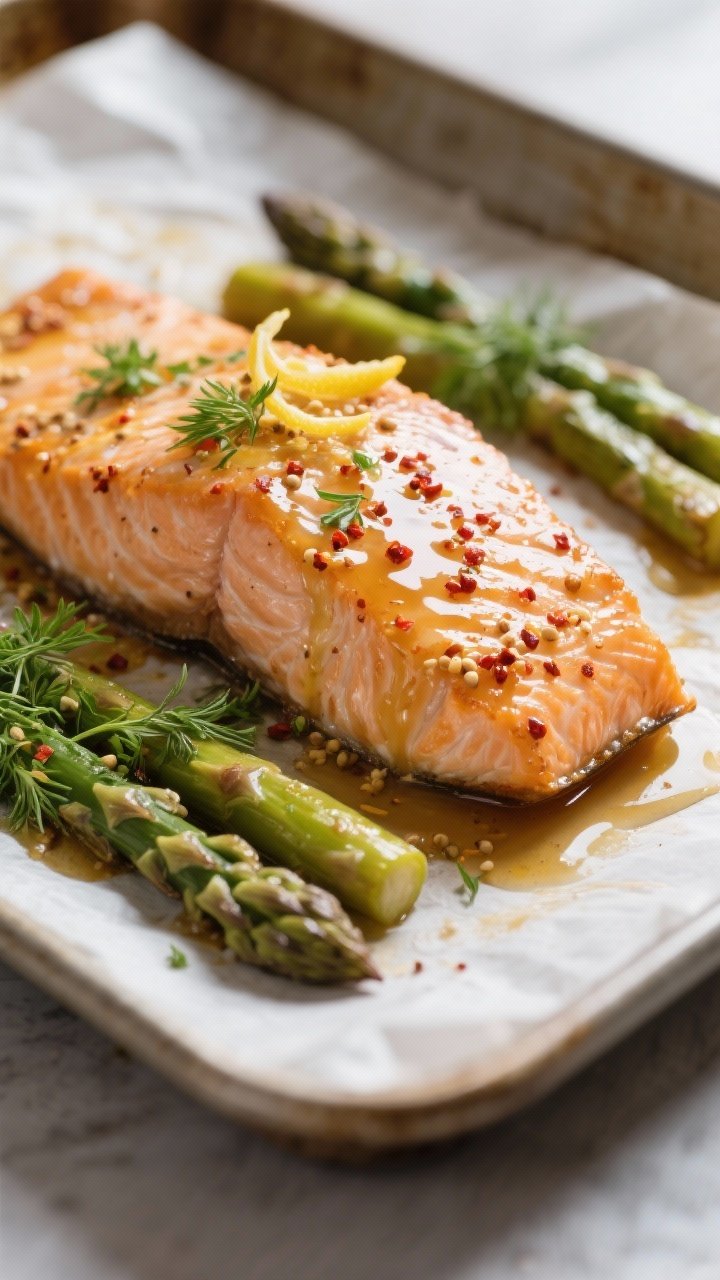
This recipe balances flavors beautifully: honey brings sweetness, Dijon adds sharpness, and garlic and lemon keep it bright and fresh. Baking the salmon keeps it moist and flaky without babysitting a pan on the stove.
It’s a solid option for busy weeknights, meal prep, or hosting friends when you want something impressive and stress-free. Plus, the sauce doubles as a quick drizzle for vegetables or grains.
Shopping List
- Salmon fillets (about 1.5 pounds total; skin-on or skinless)
- Dijon mustard (2 tablespoons)
- Whole-grain mustard (optional, 1 tablespoon for texture)
- Honey (2 to 3 tablespoons, to taste)
- Garlic (2 to 3 cloves, minced)
- Lemon (zest and juice of 1 small lemon)
- Olive oil (1 to 2 tablespoons)
- Salt and black pepper
- Smoked paprika or regular paprika (optional, 1/2 teaspoon)
- Red pepper flakes (optional, a pinch for heat)
- Fresh herbs like parsley or dill (optional, for garnish)
How to Make It
- Preheat and prep: Heat the oven to 400°F (200°C). Line a baking sheet with parchment or lightly oil a baking dish to prevent sticking.
- Pat the salmon dry: Use paper towels to dry the fillets.
This helps the sauce stick and promotes better browning. Place the salmon on the prepared pan, skin-side down if using skin-on.
- Make the sauce: In a small bowl, whisk together Dijon mustard, whole-grain mustard (if using), honey, minced garlic, lemon zest, 1 tablespoon lemon juice, olive oil, a good pinch of salt, and black pepper. Add smoked paprika and red pepper flakes if you like a little warmth.
- Taste and adjust: The sauce should be balanced—sweet, tangy, and savory.
Add a bit more honey if it’s too sharp or another squeeze of lemon if it’s too sweet.
- Coat the salmon: Spoon the sauce over the salmon, spreading it into an even layer. Reserve a tablespoon or two if you want a finishing drizzle after baking.
- Bake: Bake for 10 to 14 minutes, depending on thickness. A general guide is about 4 to 6 minutes per 1/2-inch of thickness.
The salmon is done when it flakes easily and the center is just turning opaque.
- Optional broil: For a lightly caramelized top, switch to broil for the last 1 to 2 minutes. Watch closely so the honey doesn’t burn.
- Rest and finish: Let the salmon rest for 2 minutes. Spoon on any reserved sauce, then sprinkle with chopped parsley or dill and an extra squeeze of lemon if you like.
- Serve: Pair with roasted asparagus, green beans, or a crisp salad.
Rice, quinoa, or mashed potatoes also work well to catch the extra sauce.
Storage Instructions
Cool leftovers completely, then store in an airtight container in the fridge for up to 3 days. Reheat gently in a low oven (300°F/150°C) or in a covered skillet over low heat to avoid drying it out. You can also enjoy it cold, flaked over salad or tucked into a grain bowl.
If freezing, wrap tightly and freeze for up to 2 months. Thaw overnight in the fridge and warm gently.
Why This is Good for You
Salmon is rich in omega-3 fatty acids, which support heart and brain health. It’s also a solid source of high-quality protein and essential nutrients like vitamin D and selenium.
The honey mustard sauce adds flavor without heavy cream or complex ingredients. If you pair it with vegetables and whole grains, you’ve got a well-rounded, satisfying meal that still feels light.
What Not to Do
- Don’t overbake: Dry salmon is the enemy. Pull it when it’s just opaque and flakes easily.
It will continue to cook slightly as it rests.
- Don’t skip seasoning: Even with sauce, salt and pepper matter. Season the salmon lightly before adding the glaze.
- Don’t drown it: Too much sauce can pool and steam the fish. A thin, even layer is best, with a little extra for finishing if desired.
- Don’t broil unattended: Honey burns quickly.
If you broil, keep the door cracked and your eyes on it.
- Don’t use old salmon: Freshness counts. Choose fillets that smell clean and look vibrant, with no browning or dryness.
Recipe Variations
- Maple Dijon: Swap honey for maple syrup. It’s slightly smokier and pairs well with roasted sweet potatoes.
- Herb-Crusted: Mix panko, chopped parsley, and a little olive oil.
Press on top of the sauced salmon for a crunchy finish.
- Spicy Kick: Add sriracha or a teaspoon of hot mustard to the sauce. Top with thinly sliced scallions.
- Garlic-Lemon Forward: Increase garlic and lemon zest, reduce honey slightly, and add capers for briny pops of flavor.
- Sheet Pan Dinner: Roast carrots, broccoli, or green beans tossed with olive oil, salt, and pepper for 10 minutes. Add the sauced salmon to the pan and bake everything together until the fish is done.
- Grain Bowl: Serve flaked salmon over quinoa or farro with cucumber, cherry tomatoes, and a drizzle of extra lemony sauce.
- Air Fryer Option: Cook at 375°F (190°C) for 8 to 12 minutes, depending on thickness.
Line the basket or use parchment rounds to prevent sticking.
FAQ
Never Wonder What's For Dinner Again
Save time, eat healthier, and take the stress out of dinner. Get a full week of easy healthy dinners delivered straight to your inbox.
How do I know when salmon is done?
Look for a slightly opaque center that flakes easily with a fork. If you use a thermometer, aim for about 125°F to 130°F (52°C to 54°C) for moist, medium doneness. It will rise a few degrees as it rests.
Can I use frozen salmon?
Yes.
Thaw it in the fridge overnight, then pat it very dry before saucing. If cooking from frozen, bake uncovered at 400°F and add a few extra minutes, but note the texture is best when thawed first.
What kind of mustard works best?
Dijon is key for flavor and emulsifying the sauce. Whole-grain mustard adds texture and a mild bite, but it’s optional.
Avoid yellow mustard here—it’s too mild and vinegary for this recipe.
Skin-on or skinless?
Either works. Skin-on helps keep the fish moist and releases easily from the pan once cooked. If you prefer skinless, lightly oil the pan or use parchment to prevent sticking.
Can I make the sauce ahead?
Absolutely.
Whisk the sauce up to 3 days in advance and store it in the fridge. Stir before using, as separation is normal.
What should I serve with it?
Try roasted asparagus, sautéed green beans, or a simple arugula salad. For carbs, rice, couscous, or smashed potatoes are great at soaking up the sauce.
How do I keep the salmon from sticking?
Use parchment, a lightly oiled baking dish, or a well-oiled sheet pan.
Don’t try to move the salmon right away after cooking—give it a minute, and it will release more easily.
Can I reduce the sweetness?
Yes. Cut the honey down to 1 to 1.5 tablespoons and add extra lemon or a touch more Dijon to keep the balance. You can also add a splash of apple cider vinegar for brightness.
In Conclusion
Baked honey mustard salmon is simple, fast, and full of flavor.
With pantry staples and a few fresh touches, you get a reliable dinner that works any night of the week. Keep the technique the same, tweak the sauce to your taste, and pair it with your favorite sides. It’s the kind of recipe you’ll make once and keep coming back to whenever you want something easy and satisfying.
Printable Recipe Card
Want just the essential recipe details without scrolling through the article? Get our printable recipe card with just the ingredients and instructions.
Loved This Recipe?
If you're looking for more simple, healthy dinners your family will actually eat, grab my FREE 7-Day Easy Dinner Reset. You'll get 7 easy dinner recipes, simple grocery lists, and a done-for-you plan that takes the stress out of mealtime.