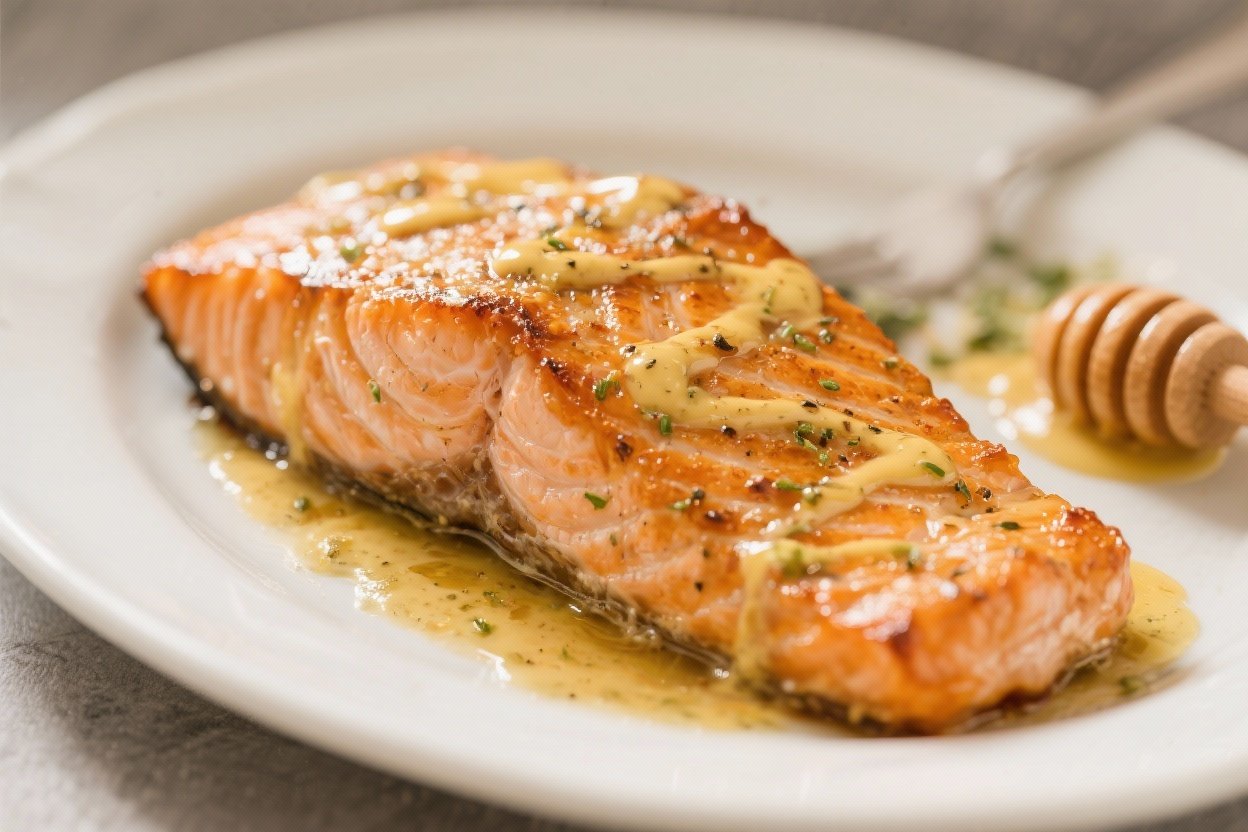
Preheat and prep: Heat the oven to 400°F (200°C). Line a baking sheet with parchment or lightly oil a baking dish to prevent sticking.
Pat the salmon dry: Use paper towels to dry the fillets.
This helps the sauce stick and promotes better browning. Place the salmon on the prepared pan, skin-side down if using skin-on.
Make the sauce: In a small bowl, whisk together Dijon mustard, whole-grain mustard (if using), honey, minced garlic, lemon zest, 1 tablespoon lemon juice, olive oil, a good pinch of salt, and black pepper. Add smoked paprika and red pepper flakes if you like a little warmth.
Taste and adjust: The sauce should be balanced—sweet, tangy, and savory.
Add a bit more honey if it’s too sharp or another squeeze of lemon if it’s too sweet.
Coat the salmon: Spoon the sauce over the salmon, spreading it into an even layer. Reserve a tablespoon or two if you want a finishing drizzle after baking.
Bake: Bake for 10 to 14 minutes, depending on thickness. A general guide is about 4 to 6 minutes per 1/2-inch of thickness.
The salmon is done when it flakes easily and the center is just turning opaque.
Optional broil: For a lightly caramelized top, switch to broil for the last 1 to 2 minutes. Watch closely so the honey doesn’t burn.
Rest and finish: Let the salmon rest for 2 minutes. Spoon on any reserved sauce, then sprinkle with chopped parsley or dill and an extra squeeze of lemon if you like.
Serve: Pair with roasted asparagus, green beans, or a crisp salad.
Rice, quinoa, or mashed potatoes also work well to catch the extra sauce.