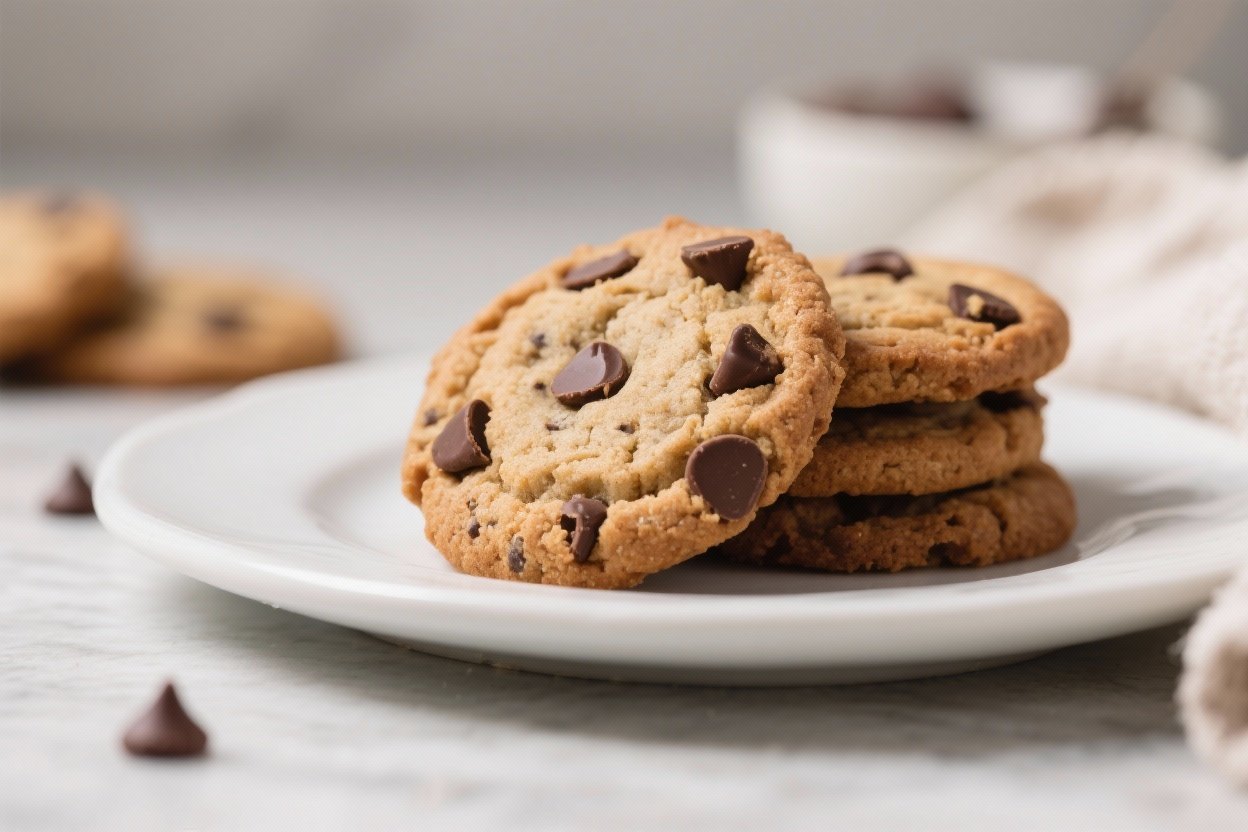
Keto Chocolate Chip Cookies – Soft, Chewy, and Low-Carb
If you miss classic chocolate chip cookies but want to keep things low-carb, these keto chocolate chip cookies hit the spot. They’re soft in the center, lightly crisp on the edges, and loaded with melty chocolate. You’ll get all the nostalgic cookie goodness without the sugar crash.
The ingredients are simple, the steps are easy, and the results are consistently satisfying. Bake a batch today and enjoy a cookie that actually fits your goals.

Why This Recipe Works
This recipe uses almond flour for a tender, cookie-like texture without the carbs from wheat flour. A mix of erythritol or allulose-based sweetener delivers sweetness without raising blood sugar, and butter adds rich flavor and helps create that soft, chewy bite.
Using egg and a touch of xanthan gum binds the dough and prevents crumbling, which is a common issue in gluten-free baking. Finally, sugar-free chocolate chips melt beautifully and make each bite feel like a real treat.
What You’ll Need
- 2 cups blanched almond flour (finely ground; not almond meal)
- 1/2 cup granulated erythritol or allulose (or a blend; adjust to taste)
- 1/2 teaspoon baking soda
- 1/4 teaspoon fine sea salt
- 1/2 teaspoon xanthan gum (optional but helpful for structure)
- 1/2 cup unsalted butter, softened (or coconut oil for dairy-free)
- 1 large egg, room temperature
- 2 teaspoons vanilla extract
- 1/2–2/3 cup sugar-free chocolate chips (Lily’s or similar)
- Optional add-ins: 1/3 cup chopped pecans or walnuts; pinch of cinnamon
Step-by-Step Instructions
- Preheat and prep: Set your oven to 350°F (175°C). Line a baking sheet with parchment paper to prevent sticking and encourage even browning.
- Mix dry ingredients: In a medium bowl, whisk almond flour, sweetener, baking soda, salt, and xanthan gum.
Breaking up clumps now helps you avoid overmixing later.
- Cream the butter: In a separate bowl, beat the softened butter with a hand mixer until smooth and slightly fluffy, about 1–2 minutes. Add the egg and vanilla, and beat again until well combined.
- Combine wet and dry: Add the dry mixture to the butter mixture. Stir until a soft dough forms.
If it seems too dry, let it rest for 2–3 minutes; almond flour hydrates as it sits.
- Add chocolate chips: Fold in the sugar-free chocolate chips (and nuts, if using). The dough should be scoopable and slightly tacky.
- Chill (optional but recommended): Chill the dough for 15–20 minutes. This helps prevent spreading and improves texture.
- Portion: Scoop the dough into 1–1.5 tablespoon balls and place them on the baking sheet, leaving about 2 inches between cookies. Gently flatten the tops with your fingers for even baking.
- Bake: Bake for 9–12 minutes, or until the edges are lightly golden and the centers look just set. Do not overbake; they firm up as they cool.
- Cool: Let the cookies cool on the baking sheet for 10 minutes before transferring to a rack.
They’re delicate when hot and will break if moved too soon.
- Serve: Enjoy warm for melty chips, or fully cooled for a chewier bite.
How to Store
- Room temperature: Store in an airtight container for up to 3 days. Slip in a small piece of bread or a slice of apple peel to keep them soft (remove after a few hours).
- Refrigerator: Keeps well for 1 week. The texture gets chewier, which many people love.
- Freezer: Freeze baked cookies for up to 2 months.
Thaw at room temperature or warm in a 300°F oven for 3–5 minutes.
- Freeze the dough: Scoop dough balls onto a tray, freeze until solid, then bag. Bake from frozen, adding 1–2 minutes to the bake time.
Benefits of This Recipe
- Low net carbs: Almond flour and sugar-free sweetener keep carbs low while still delivering the cookie experience.
- No grain or gluten: Great for gluten-free and grain-free eaters without sacrificing taste.
- Customizable sweetness: You control the type and amount of sweetener to match your palate.
- Simple pantry ingredients: No obscure flours or complicated steps.
- Satisfying texture: Soft, chewy centers with lightly crisp edges—exactly what you want in a cookie.
Pitfalls to Watch Out For
- Overbaking: Keto cookies can go from perfect to dry quickly. Pull them when edges are golden and centers look just set.
- Skipping the chill: Warm dough spreads more and can bake too thin.
A short chill improves shape and texture.
- Using almond meal: Almond meal is coarser and includes skins, making cookies gritty and crumbly. Use blanched almond flour.
- Too much sweetener: Erythritol can crystallize and feel gritty if overused. Measure accurately and consider a blend with allulose for smoother texture.
- Moving too soon: Let cookies rest on the sheet to set.
They’re fragile straight from the oven.
Variations You Can Try
- Brown butter version: Brown the butter, cool until just solid, then proceed. Adds a deep, nutty flavor.
- Salted chocolate chunk: Swap chips for chopped sugar-free chocolate and sprinkle with flaky sea salt before baking.
- Nutty crunch: Fold in chopped pecans or walnuts for texture and a toasty note.
- Coconut twist: Add 2 tablespoons unsweetened shredded coconut and a pinch of cinnamon.
- Peanut butter swirl: Marble 2 tablespoons natural peanut butter into the dough for a richer cookie.
- Dairy-free: Use coconut oil instead of butter and choose dairy-free sugar-free chips.
FAQ
How many net carbs are in each cookie?
It depends on your chip brand and cookie size, but most batches come in around 1.5–3 net carbs per cookie when using standard sugar-free chips. Check your labels and calculate based on your exact ingredients.
Can I use coconut flour instead of almond flour?
Not as a direct swap.
Coconut flour is far more absorbent and would make the dough dry and crumbly. If you need nut-free, look for a recipe developed specifically for coconut flour.
What sweetener works best?
Allulose creates a softer, chewier cookie with less cooling aftertaste. Erythritol or blends give more structure and slight crisp edges.
You can use a 50/50 mix for balance.
Why are my cookies gritty?
Granulated erythritol can crystallize as cookies cool. Try a powdered version, switch to allulose or a blend, or reduce the total sweetener slightly. Also make sure your almond flour is fine and fresh.
Do I have to use xanthan gum?
No, but it helps with structure and chew.
Without it, cookies may be more delicate. If skipping, chill the dough and avoid overbaking to keep them from crumbling.
Can I make these egg-free?
Yes. Use a flax egg (1 tablespoon ground flaxseed + 3 tablespoons water, rested 5 minutes).
The texture will be slightly more tender but still tasty.
How do I keep them from spreading too much?
Chill the dough, use parchment (not a greased pan), and measure your butter accurately. If your kitchen is warm, chill the formed dough balls on the tray for 10 minutes before baking.
Why do my cookies taste bitter?
Some sweeteners or chocolate chips leave a slight aftertaste. Try a different brand, reduce the sweetener a touch, or add a pinch of salt to balance flavors.
Can I make them bigger?
Yes, but increase the bake time by 1–3 minutes and watch the edges closely.
Larger cookies are best baked on the middle rack for even heat.
Can I add cocoa powder?
Sure. Add 2 tablespoons unsweetened cocoa powder and remove 2 tablespoons almond flour to keep the dough balanced.
Wrapping Up
These keto chocolate chip cookies give you that classic cookie joy without the sugar or grains. The method is simple, the ingredients are easy to find, and the results feel anything but “diet.” Keep a stash in your freezer, tweak the sweetness to your taste, and enjoy a cookie that supports your goals and your cravings.
Happy baking—and even happier snacking.
Printable Recipe Card
Want just the essential recipe details without scrolling through the article? Get our printable recipe card with just the ingredients and instructions.