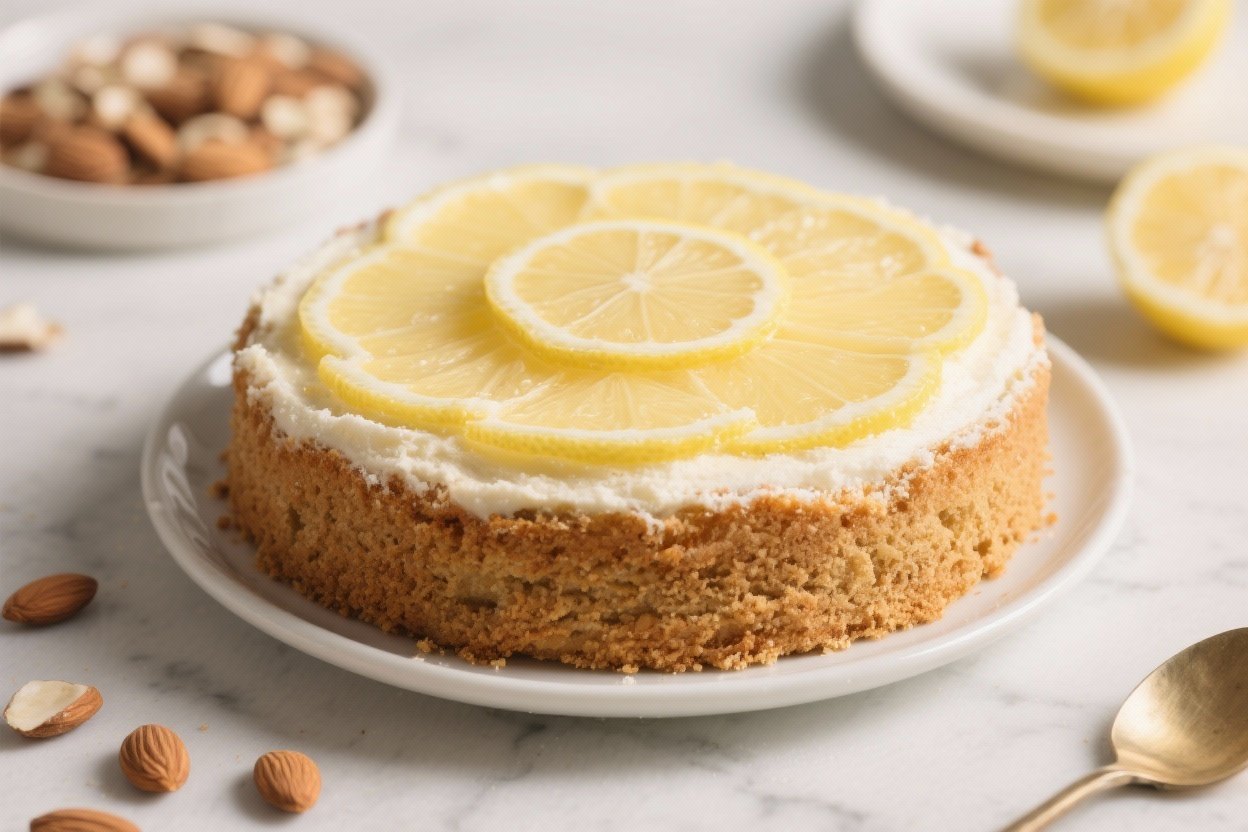
Prep the pan and oven: Preheat to 350°F (175°C).
Line an 8-inch round cake pan or a 9x5-inch loaf pan with parchment and lightly grease the sides.
Mix dry ingredients: In a large bowl, whisk almond flour, coconut flour, baking powder, and salt until evenly combined. Break up any almond flour clumps with your whisk.
Zest and juice the lemons: Finely zest both lemons first, then juice them. You’ll need about 1–2 tablespoons zest and 3–4 tablespoons juice.
Avoid the bitter white pith when zesting.
Whisk wet ingredients: In a separate bowl, whisk the eggs, granulated sweetener, melted butter (or oil), yogurt, vanilla, and almond extract. Stir in lemon zest and 3 tablespoons lemon juice. The mixture should look smooth and slightly thick.
Combine batter: Pour the wet ingredients into the dry.
Stir with a spatula until just combined. The batter will be thick but scoopable. If very stiff, add 1–2 teaspoons additional lemon juice or a splash of almond milk.
Fill the pan: Transfer the batter to your prepared pan and smooth the top.
Tap the pan gently on the counter to release air bubbles.
Bake: For an 8-inch round, bake 28–34 minutes. For a loaf pan, bake 38–45 minutes. The cake is done when the center springs back lightly and a toothpick comes out mostly clean with a few moist crumbs.
Cool: Let the cake cool in the pan for 10 minutes, then lift out with the parchment and cool completely on a rack.
Keto cakes are fragile when hot; cooling helps set the structure.
Optional lemon glaze: Mix 1/2 cup powdered sweetener with 1–2 tablespoons lemon juice or heavy cream until smooth and pourable. Drizzle over the cooled cake. For extra lemon pop, whisk in a pinch of zest.
Slice and serve: Cut into 10–12 slices.
Serve as-is or with lightly sweetened whipped cream and a few berries if your carbs allow.